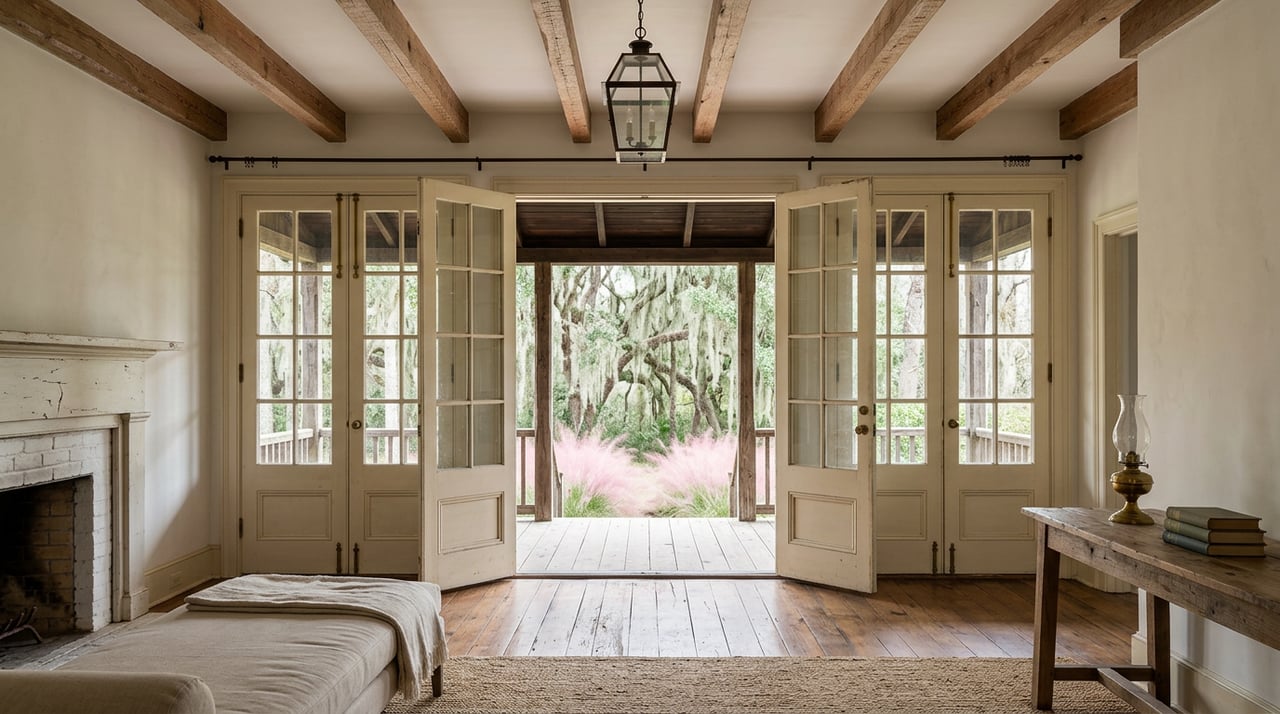
West Ashley's First County Park: What's Inside Old Towne Creek?
September 17, 2026
September 17, 2026
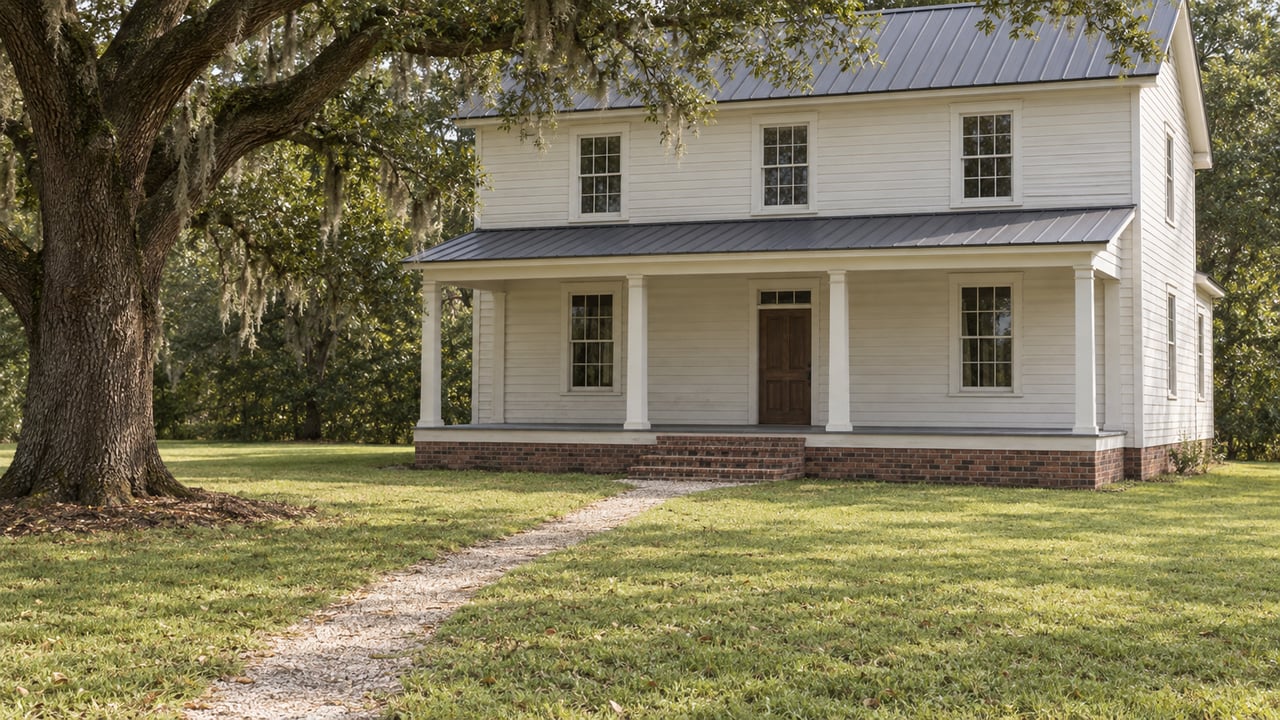
Drive down Old Towne Road toward Charles Towne Landing and you pass a stretch of live oaks and open pasture that looks, at a glance, like it has always been there and always will be. For most of the past two decades, that assumption was mostly correct. The land sat behind a gate, visited only on the occasional Wednesday evening for a wine tasting under the trees. Everyone in West Ashley drove past it. Almost no one walked through it.
That changed on June 30, when the Charleston County Park and Recreation Commission opened Old Towne Creek County Park at 1400 Old Towne Road. Sixty-seven acres of trails, boardwalks, and marsh frontage are now open to the public every day of the week. What makes this worth writing about isn't just that a new park exists. It's what took so long, who kept the land from becoming a subdivision in the meantime, and what that means for how West Ashley residents should think about their own backyard.
Here is the number that should stop you: this is West Ashley's first county park. Not first this decade, not first since some recent milestone. First, period, according to Lowcountry Land Trust, the conservation group that helped shepherd the land into public hands.
That is a strange fact for an area this size. West Ashley's population has been estimated at roughly 67,873 residents as of the city's most recent population reporting, and city officials have pointed to West Ashley accounting for close to 40 percent of Charleston's population when explaining why the area has been underserved on public infrastructure. Meanwhile, the Charleston County Park and Recreation Commission runs one of the largest municipal park systems in South Carolina: more than 11,000 acres spread across six regional parks, three beach parks, three dog parks, two fishing piers, three waterparks, a historic plantation site, a skate park, 19 boat landings, a climbing wall, a challenge course, an equestrian center, a campground, and a marina.
None of that acreage touched West Ashley until this summer.
The reason isn't neglect so much as timing and ownership. This particular 67 acres wasn't sitting empty and available. It was privately held, actively used, and deliberately kept out of the development pipeline by the family that owned it.
According to Charleston Daily, the property was once known as Ashem Farm, home to Charleston preservationist Emily Ravenel Farrow and her husband Ashby Farrow. Mrs. Farrow ran the St. Andrews Riding Academy on the site, and it was her mother, Emily Simmons Ravenel, who along with her planted many of the ornamental trees and shrubs that now anchor the park's arboretum.
In 2005, Farrow placed a conservation easement on the property with the Historic Charleston Foundation, a legal mechanism that required the land to eventually provide public benefits: scenic views, wildlife habitat, outdoor recreation, education, and historic preservation. That single decision is the reason there was anything left to turn into a park at all. After Farrow's death in 2011, the Charleston County Park and Recreation Commission purchased the property from Lowcountry Land Trust, which had been holding it in trust. Construction on the public-facing park broke ground in April 2023, and the process from groundbreaking to grand opening took a little over three years.
The land is now conserved as what CCPRC calls a living memorial to Emily Simmons Ravenel. Kevin Bowie, the commission's executive director, put it simply at the opening celebration: the park reflects the county's mission to provide exceptional parks and programs, and its trails, playground, and arboretum carry forward a piece of West Ashley's story that could easily have disappeared under a subdivision plan instead.
The park's design keeps the working bones of the old farm visible rather than erasing them. Three structures anchor the site, and each one has a history worth knowing before you visit.
| Structure | What it was | What it is now |
|---|---|---|
| The Rain Hut | Shelter for pupils of the St. Andrews Riding Academy | Preserved and repurposed as the park's Welcome Center |
| Fox Field Shelter | New construction | Built by students in Clemson University's School of Architecture CommunityBUILD program, prefabricated and assembled on site |
| Paddock Pavilion | New construction | Shelter near the playground with restrooms and outdoor seating |
Beyond the structures, the park offers accessible trails and boardwalks with views over Old Towne Creek and the surrounding salt marsh, a nature-inspired playground built around natural play elements rather than standard equipment, and an arboretum planted with the ornamentals the Ravenel and Farrow women cultivated over decades. Interpretive signage throughout the grounds explains both the site's colonial-era significance and its more recent history as a working farm and riding academy.
The historical layer runs deeper than most new parks bother with. This stretch of Old Towne Creek was part of the waterway English colonists navigated in 1670 while establishing Charles Towne, South Carolina's first permanent English settlement, just up the road at what is now Charles Towne Landing State Historic Site. The creek formed part of the young colony's western boundary. Old Towne Creek County Park sits directly adjacent to that historic site, and next door to Lowcountry Land Trust's own headquarters at the Lowcountry Center for Conservation, forming a connected corridor of protected land along the water that residents can now walk end to end.
If you're planning a visit, the practical details matter more than they might for a park you've known your whole life, because this one's schedule just shifted. The park operated from 8 a.m. to 8 p.m. through August. As of this month, it has moved to its fall and winter schedule of 8 a.m. to sunset, which will hold through December and then again from January through April.
Admission runs $2 per person, with free entry for CCPRC Gold Pass holders and children 2 and under. That is a low bar for a park with this much acreage and this much history attached to it, and it puts Old Towne Creek in line with the rest of the county park system rather than treating it as a premium or event-only space.
The Wine Down Wednesday series that once represented the only way most people experienced this land returned on August 26, now running alongside full daily public access rather than standing in for it. CCPRC has said educational and nature programming will continue year-round, which is a meaningful shift from the site's previous life as a mostly private, occasionally-rented event space.
Charleston's growth stories tend to run through Sam Rittenberg Boulevard and the retail corridors: a new Publix, a new apartment building, a shopping center rebuilt from the ground up. Those are real changes, but they're commercial ones. Old Towne Creek County Park is a different kind of story. It's the first time the county's own park system has put down roots in an area that has spent decades absorbing the bulk of the city's population growth without a comparable share of its public green space.
It's also a reminder that some of the most consequential decisions about how a neighborhood looks in fifty years get made quietly, by individual families, long before anyone else is paying attention. Emily Ravenel Farrow's 2005 easement is the reason this land is a park today instead of another phase of townhomes. The Rain Hut still standing at the entrance, repurposed rather than demolished, is a small but real sign of what that kind of long-view stewardship looks like in practice.
If you've lived in West Ashley for a while, this is worth a Saturday morning. Walk the boardwalk out to the marsh overlook, read the interpretive signage near the arboretum, and take in a piece of the area's history that has been sitting just out of reach for most of your time here.
Handsome Properties keeps a close eye on what's actually changing across West Ashley, the Charleston peninsula, and the rest of the Lowcountry, from new parks to the market conditions that shape them. If you're curious what a change like this means for a specific property or a specific street, we're glad to talk it through.


Handsome Homes
Transforms property buying and selling into a thoughtful, curated, and highly personalized experience, expertly tailored to Charleston’s luxury, historic, and exclusive real estate markets.