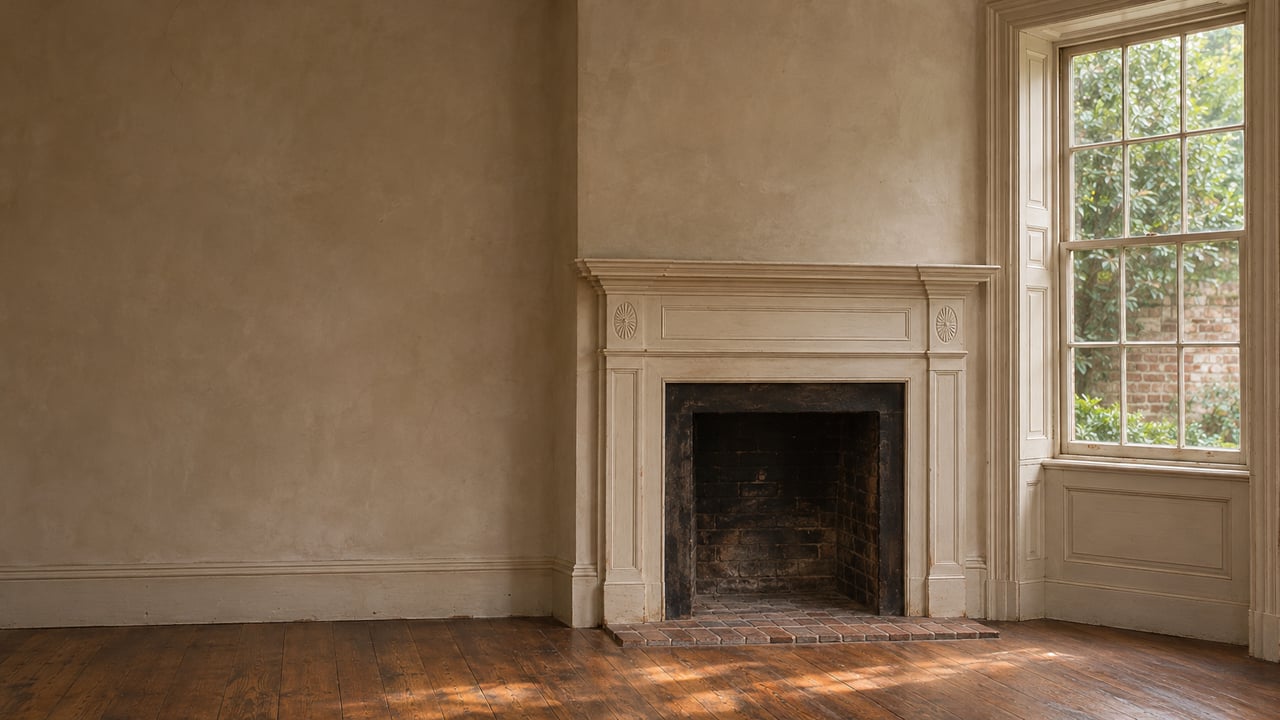
Charleston Wants a Clock on Empty Historic Buildings. What Does That Mean for a Buyer?
November 12, 2026
November 12, 2026
On August 12, 2026, an engineering report on the former Emma Abbott Memorial Chapel at 52 Cooper Street found extensive roof deterioration from prolonged water intrusion. Some support beams and columns showed advanced decay. Engineers concluded that stabilizing the building was not feasible without significant risk to workers. Charleston's chief building official then ordered the 1890s chapel demolished as an immediate public safety threat, ABC News 4 reported. That kind of order is a path that can bypass the Board of Architectural Review and public notice, as the Charleston Business Report described it. The building, later home to Mt. Sinai Holiness Church of Deliverance, came down in late September.
Charleston reviews a new shutter color or a relocated HVAC unit in detail. Its rules have given far less weight to the simple act of leaving a building empty. The city is now drafting changes meant to make vacancy cost the owner something. If those changes advance, an empty historic house becomes a different purchase from the one it is today.
The sequence matters because each step was routine on its own.
In a statement afterward, the city said, "What is already clear is that our own process has gaps, and those are ours to fix," as ABC News 4 reported. It said it was reviewing whether the conditions attached to the permit had been followed. It also pledged meaningful public notice before future historic demolitions, a funded survey of downtown's historic buildings, and a measure of cultural significance in future decisions.
Preservationists call this "demolition by neglect": a building deteriorates because no one maintains it. In its November 2 recommendations, Historic Charleston Foundation notes that neglect can be willful or unwillful. The foundation's reading of the city code shows how the existing rules can push an owner toward letting a building go.
Start with the repair standard. Under Sec. 7-94, the chief building official can order an uninhabitable building repaired only if the work "can be made at a reasonable cost in relation to the value of the dwelling." That test is purely financial. The BAR, by contrast, weighs history, architecture, the surrounding area and cultural use when it considers a demolition. Each year of water intrusion raises repair costs against the building's value, so the financial test tilts further toward demolition.
Once the chief building official finds a public safety threat, the order can bypass the BAR entirely. And outside the Old City District, BAR approval is required for demolition but not for alterations or new construction. If a building collapses, the foundation writes, the land carries no duty to reproduce what stood on it.
Restoration, meanwhile, carries no city tax relief. Since 1992, South Carolina's Bailey Bill has let local governments freeze assessments on rehabilitated historic property for up to 20 years. According to the Charleston City Paper in August 2026, at least 19 local governments have adopted it, and Charleston is the only major city in the state that has not.
Put together, an owner who restores a historic building pays for the work and gets no city tax freeze. An owner who waits faces a repair test that grows easier to fail. The city's main deterrent has been fines through Livability Court, up to $1,087 per ticket, Live 5 reported in October.
At the October 22 meeting of City Council's Community Development Committee, the agenda item was titled "Update on 52 Cooper Street and process improvements." Dave Pettine, the city's new section chief of planning, permitting and engineering, presented staff's plan. The Charleston Business Report summarized the plan from The Post and Courier's coverage.
| Timeframe | Proposed step | What it would change |
|---|---|---|
| First 1 to 3 months | Clear procedures and guidance; reconvene the Demolition by Neglect Task Force first formed in 2011 | Defines what the city expects from owners |
| First 1 to 3 months | Score at-risk buildings by condition, historic significance, ownership and safety risk, and keep the list current | Puts specific addresses on a ranked list |
| First 1 to 3 months | Better notice-of-violation letters | Changes how owners hear from the city |
| 6 to 9 months | Code amendments that could classify sites neglected, boarded or vacant for more than six months as public nuisances | Makes vacancy itself an enforcement trigger |
| 6 to 9 months | More citations for willful neglect; study whether fines could fund stabilization instead of going to the general fund | Sends the cost of neglect back into the buildings |
The fourth row matters most to a buyer. Today the trigger for city action is a building's condition. A six-month vacancy standard would make the owner's occupancy timeline part of the rules.
No motions were made at the meeting, so all of this remains a proposal. The Charleston Business Report noted that the city has no clear count of its rundown or boarded-up buildings. Mayor Cogswell said "there's no silver bullet" and that the city would "have to get very creative."
A parallel effort is already under way. Charleston is running a 16-week initiative with the Bloomberg Center of Public Innovation at Johns Hopkins University. It combines property databases to rank buildings by need and risk, and it will test outreach in a neighborhood with many vacant properties. In October 2026, Amy Sutherland, the city's director of livability and tourism, told Live 5 that the city was monitoring about 225 vacant properties on the peninsula alone. The program offers education and connections to resources. Live 5 reported that it is not a renovation grant program.
Historic Charleston Foundation, the Preservation Society of Charleston and Save Our Structures Charleston submitted joint recommendations aimed at the gaps the chapel exposed:
The last point matters at the closing table. When ownership has been divided across generations without probate, the foundation writes, banks will not lend against the clouded title. Tax credits and FEMA funding become unavailable, and the city has no clear owner to enforce against.
Julie O'Connor of Save Our Structures Charleston called the emergency power "an important public safety authority in emergency cases" but said "it should not be used in cases of demolition by neglect," according to the Charleston Business Report. Her group also presented a short list of peninsula properties it considers endangered. Councilmember Aaron Polkey of District 4 told Live 5 that the goal is to avoid these becoming "public safety decisions" and to act "months and years in advance."
On October 21, a day before the committee meeting, the Planning Commission's agenda included a draft amendment to Sec. 54-235. That section governs the inventory map that identifies peninsula structures to be preserved and guides the BAR. The map in the code rests on a 1972 to 1973 survey, amended by surveys from 1985 and 2004. The draft would let City Council adopt future revisions by resolution after a majority vote of the BAR, rather than by amending the zoning ordinance each time. Combined with the city's pledge of a funded downtown survey, this would make it easier to update how buildings are rated. A rating attached to a property today may be revised more readily in the future.
Taken together, these proposals would change the terms of holding an empty historic building. A buyer who plans to close and leave a property vacant while designs go through the BAR, or while a second-home timeline plays out, would be holding an asset the city is moving to watch more closely. That would include a risk score, clearer violation notices, and possibly a six-month vacancy standard. None of these is law today. A purchase this winter would sit in the period when these rules are being written, so the holding plan belongs in the underwriting, alongside the renovation budget.
This is general information, not legal, tax or financial advice. Confirm how any rule applies to a specific property with an attorney or other qualified professional.
Are any of these demolition-by-neglect rules in effect now? No. Staff and preservation groups presented proposals on October 22, and the committee made no motions. Staff described its next steps in phases of one to three months and six to nine months.
Can a Charleston owner get a historic property tax freeze after restoring a house? The state Bailey Bill allows it, but as of the City Paper's August 2026 report, the City of Charleston had not adopted it.
What can the city do to a building that is already uninhabitable? Historic Charleston Foundation notes that the city can step in to stabilize or repair such a building and secure its costs with a lien. The code consistently names repair as the first course of action before demolition.
When you are considering a vacant or unrestored historic property, Handsome Properties can help you build a plan for the months between closing and completion, including the vacancy and enforcement questions Charleston is now taking up. Start with a free home valuation, and we will talk through the property you have in mind.

Handsome Homes

Transforms property buying and selling into a thoughtful, curated, and highly personalized experience, expertly tailored to Charleston’s luxury, historic, and exclusive real estate markets.