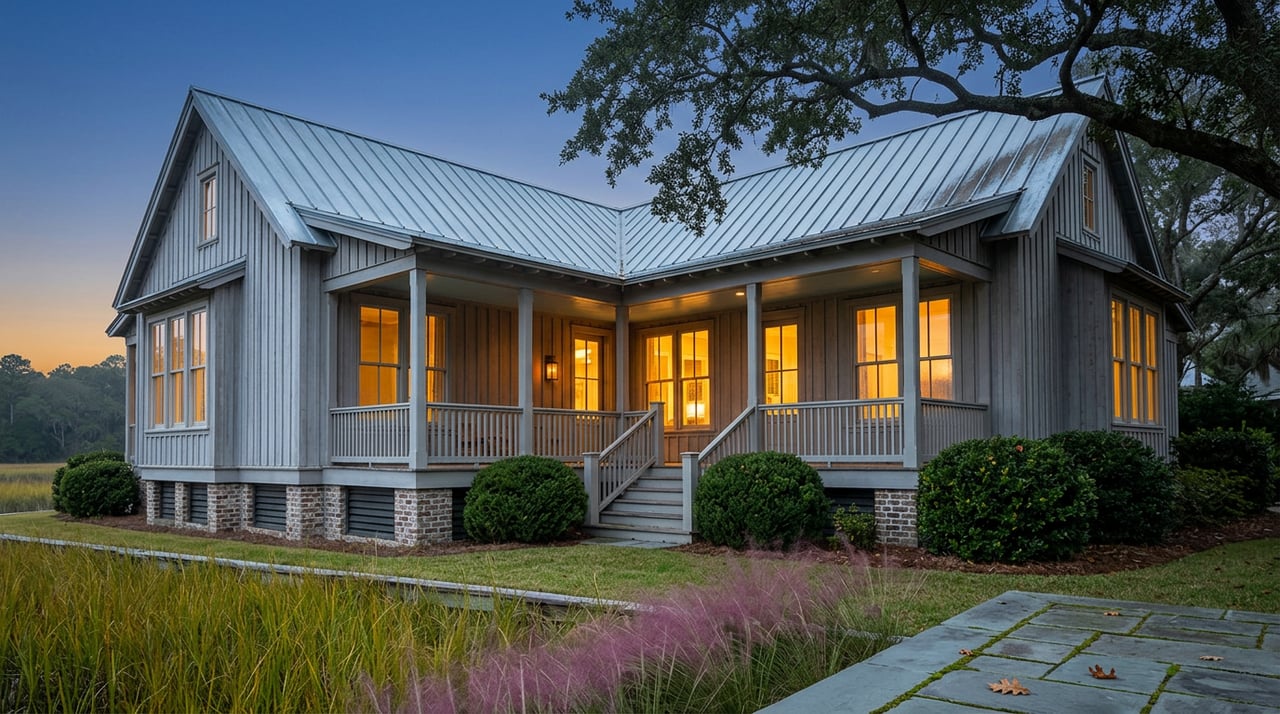
James Island Turned Down State Money Twice This Year. Camp Road Explains Why.
September 17, 2026
September 17, 2026
Most towns take free infrastructure money when the state offers it. James Island didn't.
In May 2026, the Town Council voted unanimously to reject a South Carolina Department of Transportation safety package for Folly Road, the corridor that functions as the island's Main Street and its only route on and off. The rejection wasn't just about the raised medians everyone had been arguing about for a year. Because the state's offer was all or nothing, saying no to the medians also meant saying no to the new sidewalks, upgraded crosswalks, and resurfacing that came bundled with them. The town chose to pay for its own version of those improvements rather than accept the state's.
That's decision one. Decision two happened five months earlier, when the town broke ground on a $3 million Arts and Community Center, funded through hospitality tax revenue and sponsorships rather than another lease arrangement with Charleston County, the kind of deal that left the island without a community center for more than a year after the old leased building shut down.
Neither decision was cheap. Both were deliberate. And if you live on James Island, both explain something about the Camp Road corridor that's easy to miss if you only notice the new steakhouse sign going up: the island keeps choosing to own its Main Street instead of borrowing it, and the bill for that choice is arriving in more than one place at once.
The median fight had been building since at least early 2025, when SCDOT presented its S.C. 171 Safety Corridor Project, a plan covering roughly five miles of Folly Road with a crash history serious enough to justify federal safety funding. State data showed more than 2,100 vehicle crashes and six fatalities on the corridor over a recent five-year stretch, and DOT's own modeling suggested raised medians could cut crashes by as much as 57 to 70 percent by eliminating uncontrolled left turns.
Business owners along Folly Road weren't convinced the tradeoff was worth it. George Hyams, who owns Hyams Garden & Accent Store on Folly Road, worried the medians would cut off easy access to his storefront. Carol Linville, who owns a shopping center on the corridor, said longtime tenants were already asking whether they should renew their leases if the medians went in. More than a thousand residents signed a petition against the plan.
Mayor Brook Lyon's argument wasn't that Folly Road is safe. It's that medians would push delivery trucks and commuters into residential side streets, the same streets where residents walk, bike, and push strollers. As Lyon put it when the council made its final call, the town was "promoting safety by saying no to the medians."
Here's the part that's easy to miss in the headlines about the vote itself: rejecting the medians didn't just kill the one unpopular element of the plan. It killed the whole state-funded package for the town's stretch of the corridor.
| What the state offered | What the town gets instead |
|---|---|
| New sidewalks along the town's section | Town-funded sidewalks, on a timeline the town controls and pays for |
| Upgraded, high-visibility crosswalks | Whatever crosswalk improvements the town budgets for separately |
| Road resurfacing | No state resurfacing commitment for that stretch |
| Raised medians (the disputed element) | None |
A Post and Courier editorial in the weeks after the vote raised exactly this concern, noting that the town's decision meant forgoing not just the medians but the resurfacing, sidewalks, and crosswalk upgrades that came with the same package. Charleston County and the City of Charleston, which control other segments of Folly Road, accepted their versions of the deal and are moving into construction, with the county's Phase 1 contract expected to go to a vote in the following months. James Island's stretch, the part that runs through the town's own business district, is the one piece now waiting on the town to find its own funding.
Ask around the island and you'll hear this framed as a win. Councilman Lewis Dodson's argument at the meeting where the town formally withdrew was blunt: safety first, no more commercial traffic pushed into residential neighborhoods. That's a defensible position. It's also a position that costs money the state was ready to spend for you, and the town now has to find that money on its own for sidewalks it still wants.
A few miles from Town Hall, a different kind of local bet just paid off, and it tells the same story from the other direction.
Smoky Oak Taproom held down 1234 Camp Road for thirteen years before it closed in 2021. What followed was a run of concepts that never quite took, spaces that opened, struggled, and closed again, the kind of churn that makes a building feel cursed rather than just vacant.
This fall, Josh and Katie Drewry are reopening it as Char House Social, a Texas-style steakhouse and bar. The Drewrys aren't outside operators testing the market. They already run The Harlow, the burger-and-oyster spot on Harbor View Road they opened in November 2023, and Katie Drewry grew up on James Island. Josh Drewry has described The Harlow as their first commitment to the island and Char House Social as a second one, built around what he says people kept asking for closer to home.
The building itself is a tell. A space that cycled through failed concepts for years didn't get picked up by a regional chain looking for a foothold. It got picked up by two people with a decade of history eating at the restaurant that used to be there, betting that James Island wanted a version of what it already had rather than something imported. Executive chef Brett Riley, who already leads the kitchen at The Harlow, will run this one too. No reservations, a permanent stage for live music, and an outdoor area the Drewrys are calling The Yard.
That's the same pattern as the Folly Road vote, just in miniature. Rather than let an outside chain fill the space on its own terms, the island's own operators filled it on theirs, even though that meant taking on a building with a track record of failure.
The third piece of this is the Arts and Community Center, which broke ground on April 23, 2026, at the corner of Hillman Street and Dills Bluff Road. The old arts center, several blocks away on Camp Road, closed after the town discovered the building it leased from Charleston County would need repairs the town didn't own the right to make. For more than a year, yoga classes, knitting groups, and youth programs ran out of Town Hall instead.
The new 10,000-square-foot center, expected to be finished by May 2027, is being paid for through the town's hospitality tax revenue and a sponsorship program rather than another lease. It'll include an auditorium, a public-access business center with free Wi-Fi, and a multipurpose room for classes and community events. Mayor Lyon has said the goal was a building the town actually owns this time, so a repair bill or a landlord's decision can't shut it down again.
Three separate decisions this year. A vote against state-funded road work, a bet on local restaurant owners over an outside chain, a community center funded from the town's own tax base rather than leased. None of them were the cheapest option available. All three trade outside money and outside control for something the island keeps for itself.
If you've lived on James Island for a while, none of this will surprise you as an attitude. What might surprise you is how consistently it shows up in unrelated decisions made by unrelated people in the same twelve months. The town council didn't coordinate with the Drewrys. The Drewrys didn't coordinate with the arts center fundraising committee. But all three landed on the same instinct: better to build it yourself, slower and at greater cost, than to take someone else's version of it.
That instinct has a price. Folly Road residents are still waiting on sidewalks the state was ready to fund. The arts center won't open until spring 2027 at the earliest. Char House Social doesn't have a firm opening date yet either, just a target of this fall. If you're weighing whether island life still has room to change on its own terms, this is the year that answered the question, even if the answer took its time arriving.
If you're curious what any of this means for property values along Folly Road or Camp Road, or just want to talk through what's changing on the island you already call home, the team at Handsome Properties keeps an eye on these things year round. Reach out any time you want a local read on what's actually happening here, not just what's on the sign out front.


Handsome Homes
Transforms property buying and selling into a thoughtful, curated, and highly personalized experience, expertly tailored to Charleston’s luxury, historic, and exclusive real estate markets.