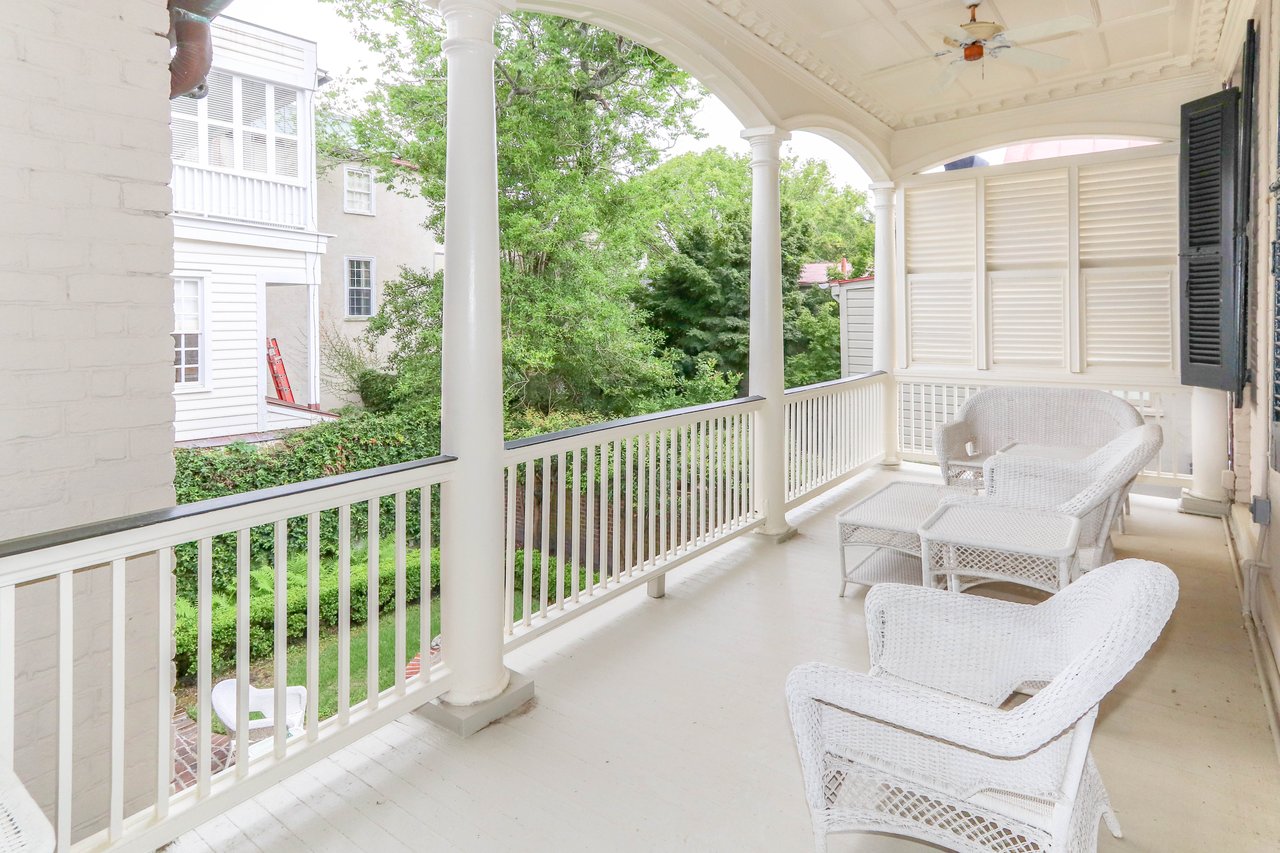
The Charleston Piazza: The History Behind Charleston’s Iconic Porches
September 25, 2026
September 25, 2026
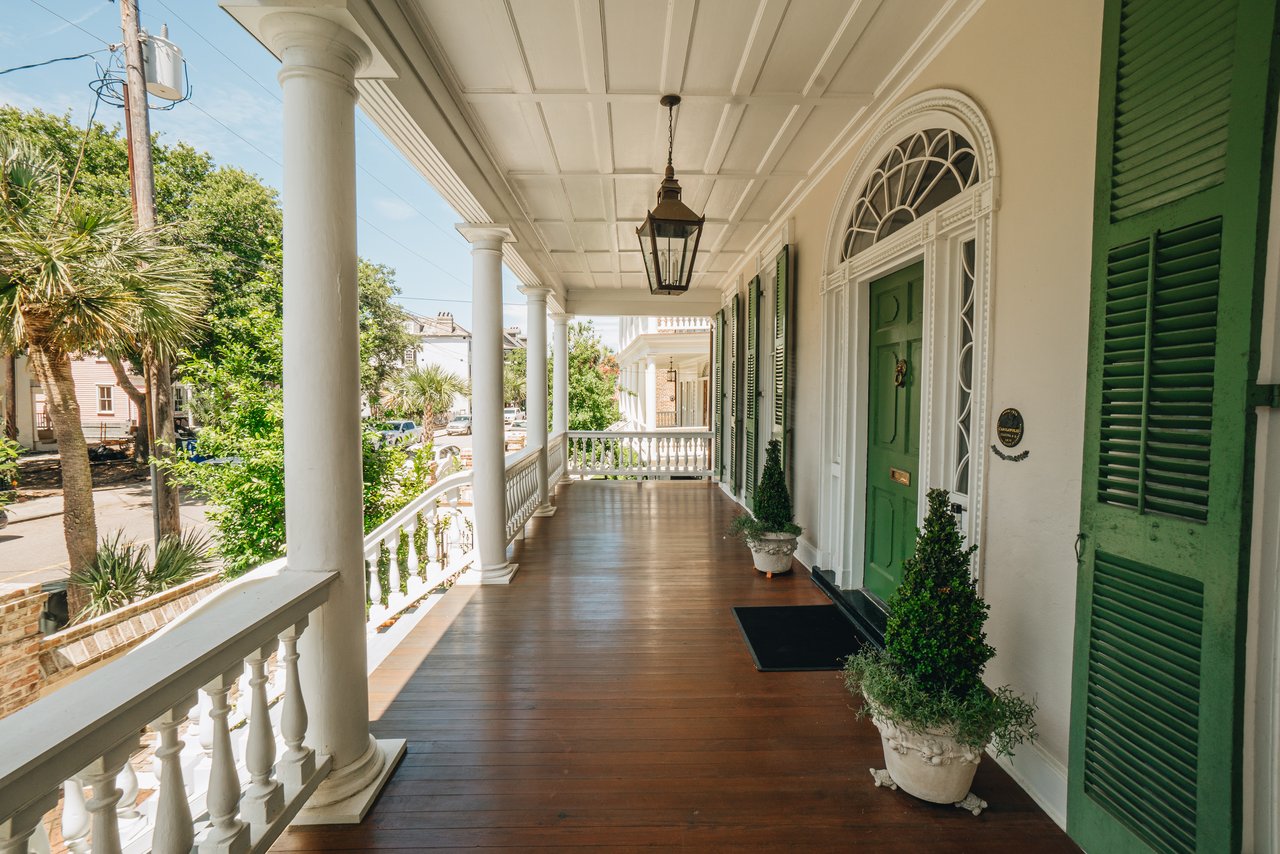
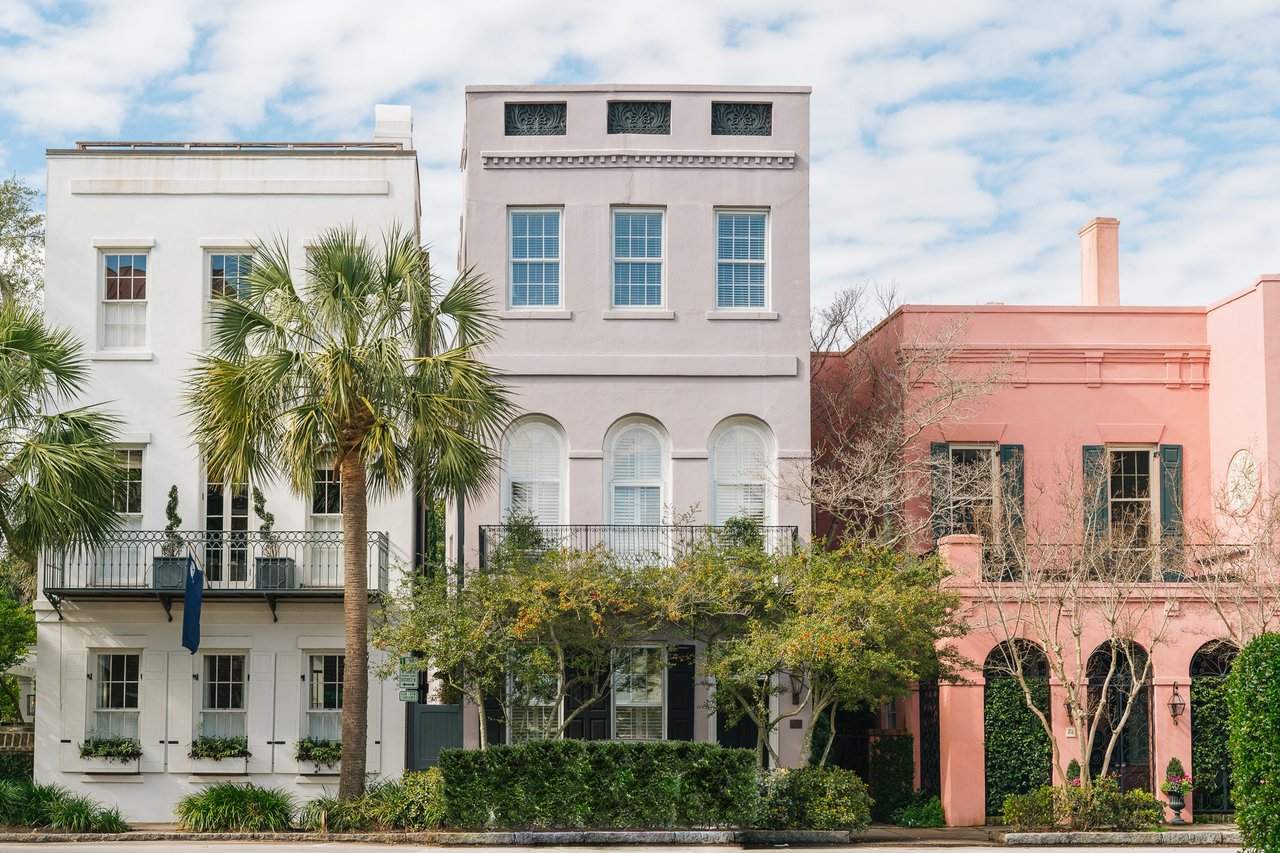
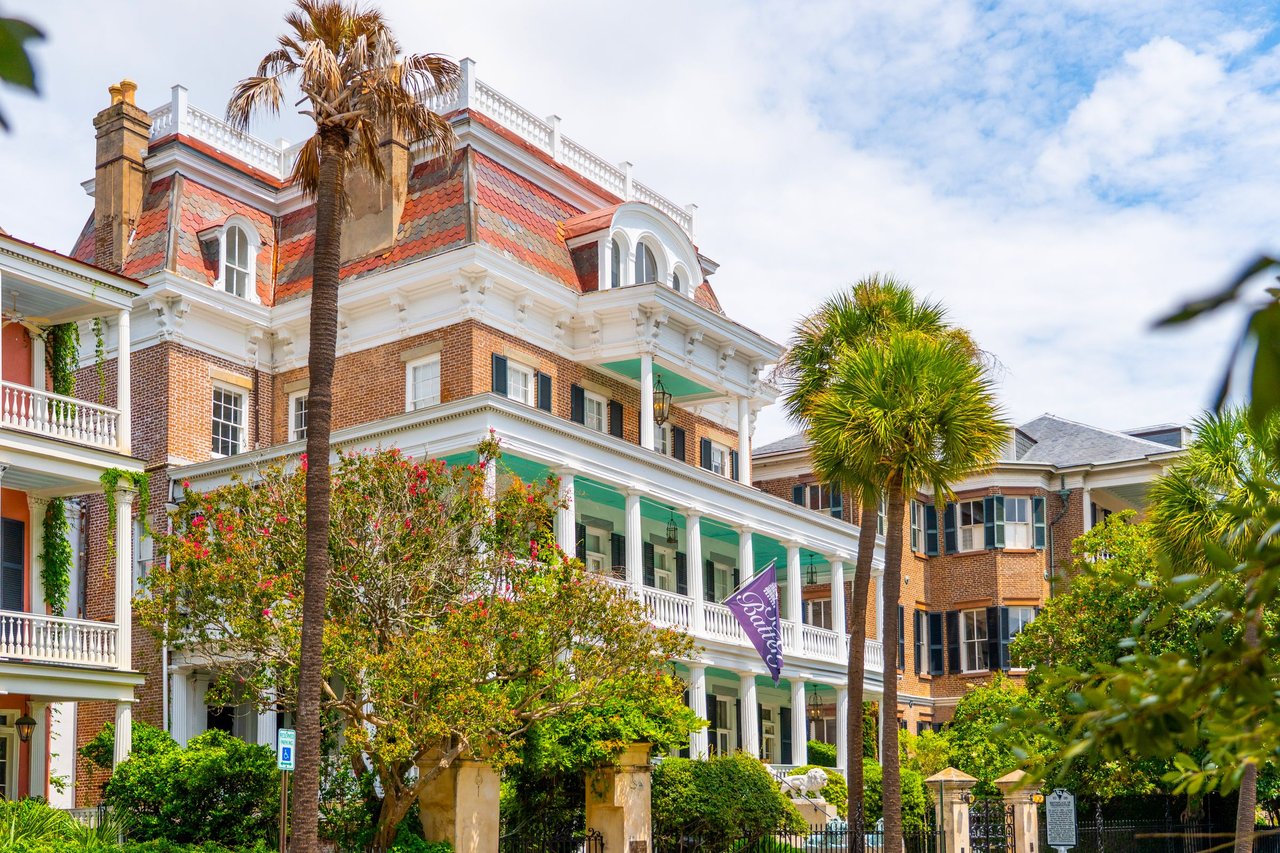
Charleston is known for its colorful homes, cobblestone streets, and historic architecture, but one feature is especially connected to the city’s identity: the Charleston piazza. These long, covered porches can be found throughout downtown and are especially recognizable on traditional Charleston Single Houses. As you walk through neighborhoods like South of Broad and the French Quarter, it is easy to see how outdoor spaces have become such an important part of Charleston's architectural style.
While piazzas add to the beauty of Charleston homes, they were originally designed for much more than appearance. Charleston's warm climate, narrow city lots, and social culture influenced their design. Today, these porches continue to connect the city's history with the indoor-outdoor lifestyle that makes Charleston living so unique
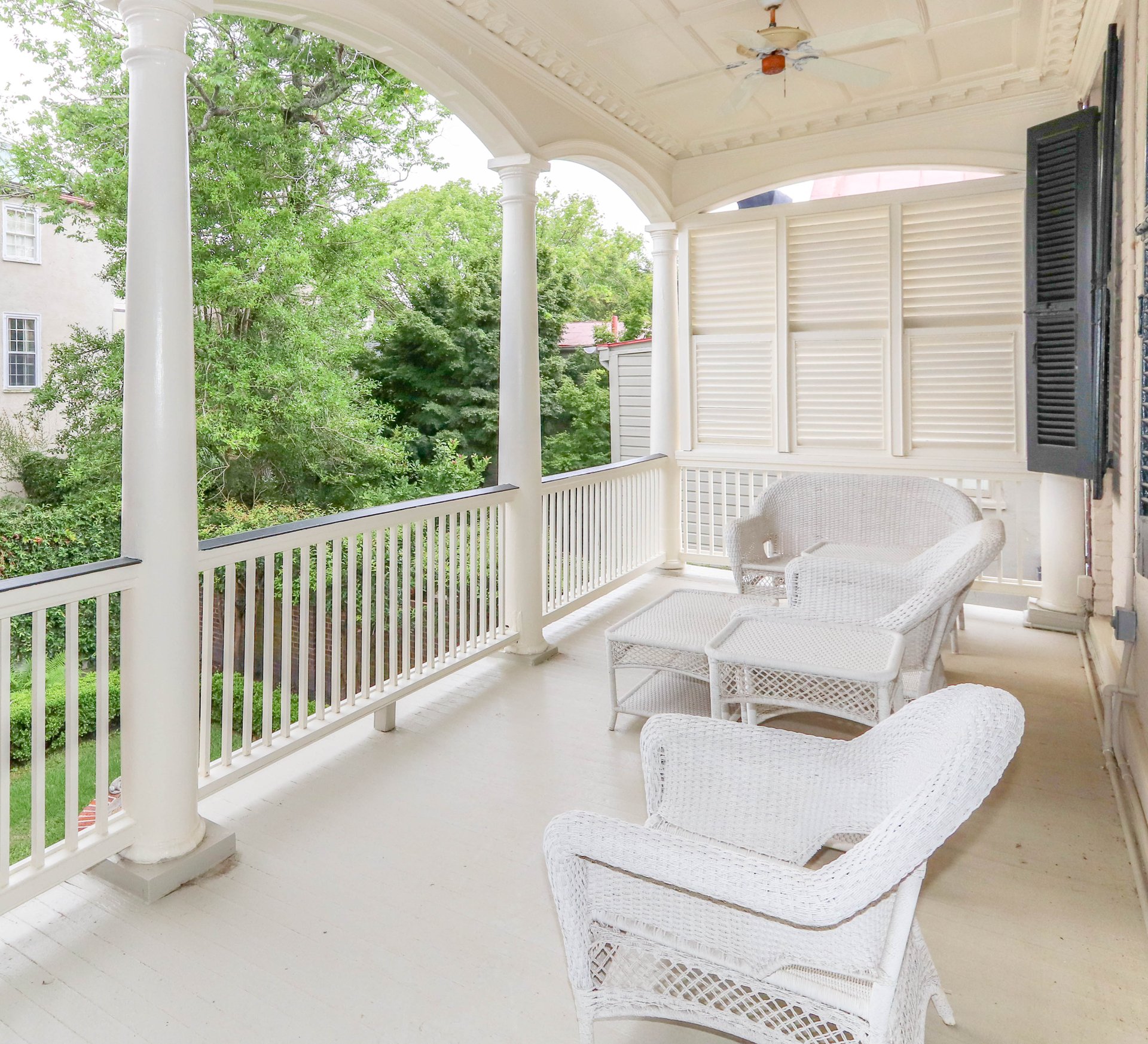
The Charleston piazza has been part of the city's architectural story for centuries. According to the Preservation Society of Charleston, the word "piazza" was being used in Charleston as early as 1700, when the city permitted piazzas to extend over public sidewalks. After the devastating fire of 1740, front-facing wooden porches became less common, while porches along the sides of detached houses developed into the style now associated with Charleston.
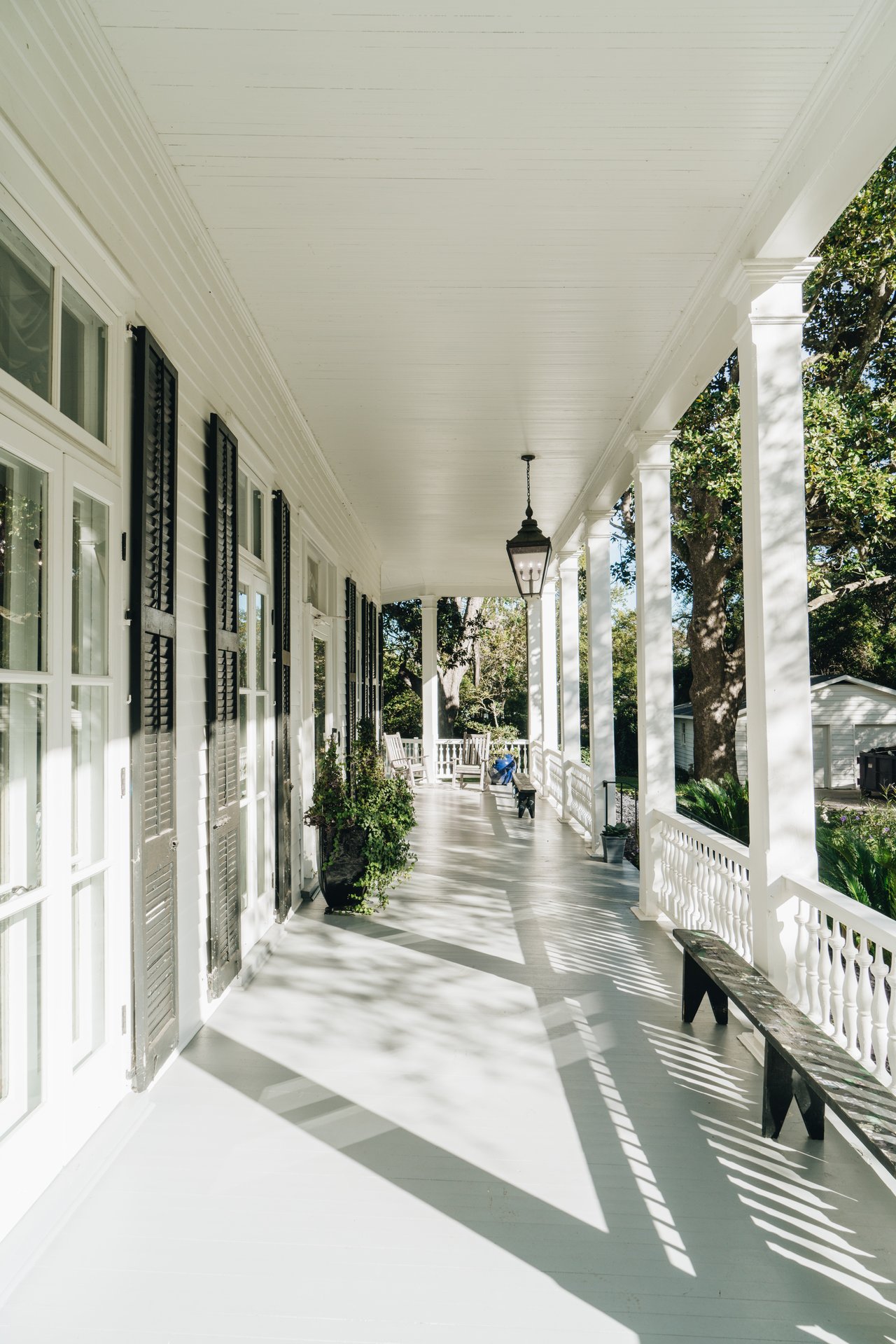
Piazzas eventually became closely connected to the traditional Charleston Single House. These narrow homes generally have their shorter side facing the street, with rooms extending toward the back of the property and a piazza running along the longer side. The Preservation Society describes the Single House as one room wide and two rooms deep, with a central stair hall and side piazza. You can learn more about what makes these homes distinctive in Handsome Properties' guide to Charleston’s historical architectural styles.
Historic examples of piazzas can still be found throughout downtown Charleston. Homes along Tradd, Legare, Meeting, and other historic streets preserve architectural details that date back generations. Tradd Street's rich history offers several examples of Charleston Single Houses, where side piazzas helped shape the neighborhoods distinctive architectural character.
Before air conditioning became part of everyday life, Charleston's hot and humid summers had a major influence on the way homes were designed. Piazzas provided much-needed shade while also creating an outdoor area where residents could escape some of the heat inside their homes.
Their placement was intentional as well. Many piazzas were positioned along the south or west side of the house, helping provide shade and capture coastal breezes. The Preservation Society of Charleston's guide to South of Broad piazzas explains that these spaces became important living and even sleeping areas during hot weather because of the relief provided by sea breezes.
Tall windows and doors also helped connect the piazza to the home's interior, allowing air to circulate more easily. This combination of shade, airflow, and thoughtful positioning shows how Charleston architecture adapted to the Lowcountry environment long before modern cooling systems existed.
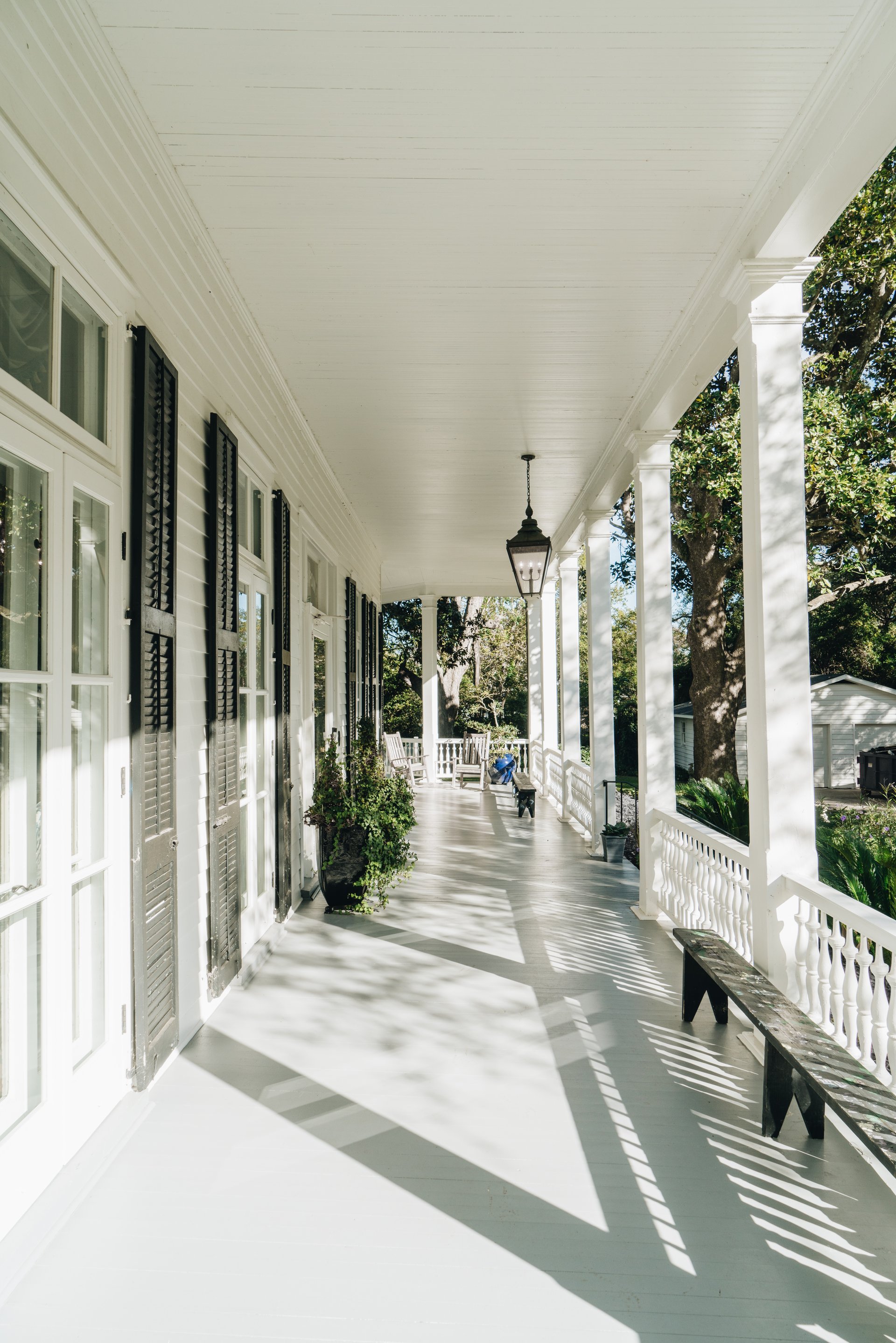
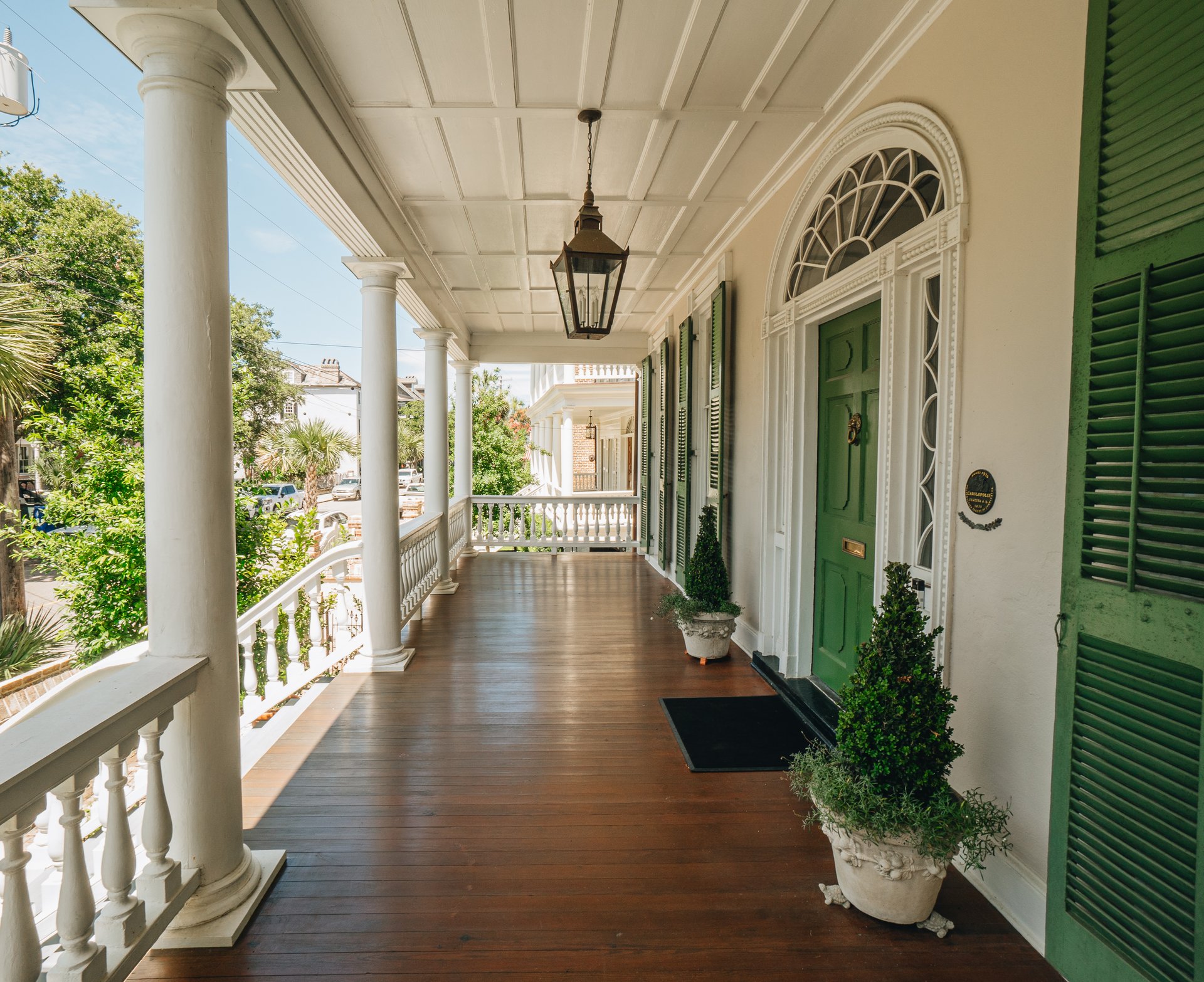
Over time, the piazza became much more than a practical response to Charleston's climate. It developed into an extension of the home's living space and a place where families could relax, entertain guests, and spend time outdoors.
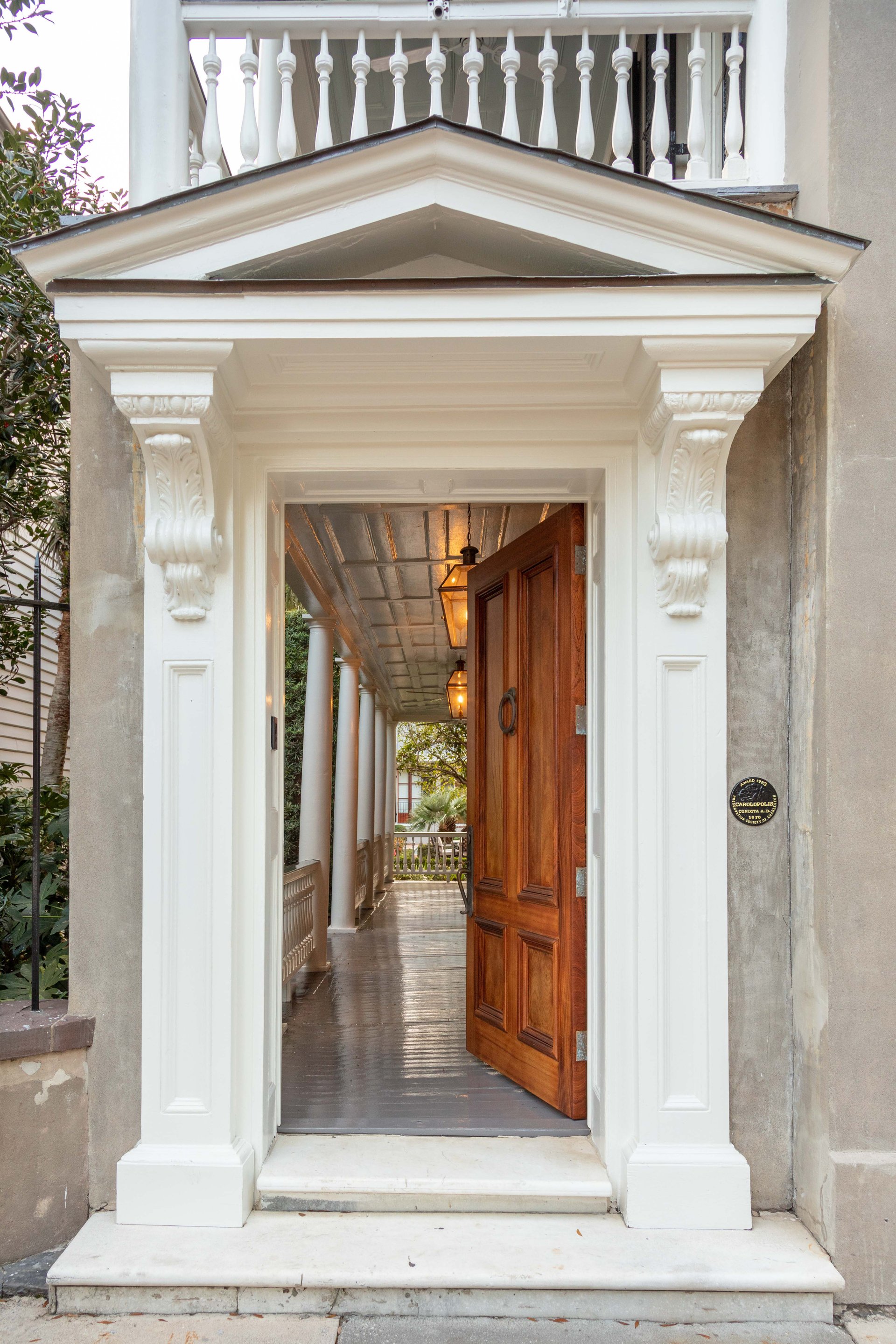
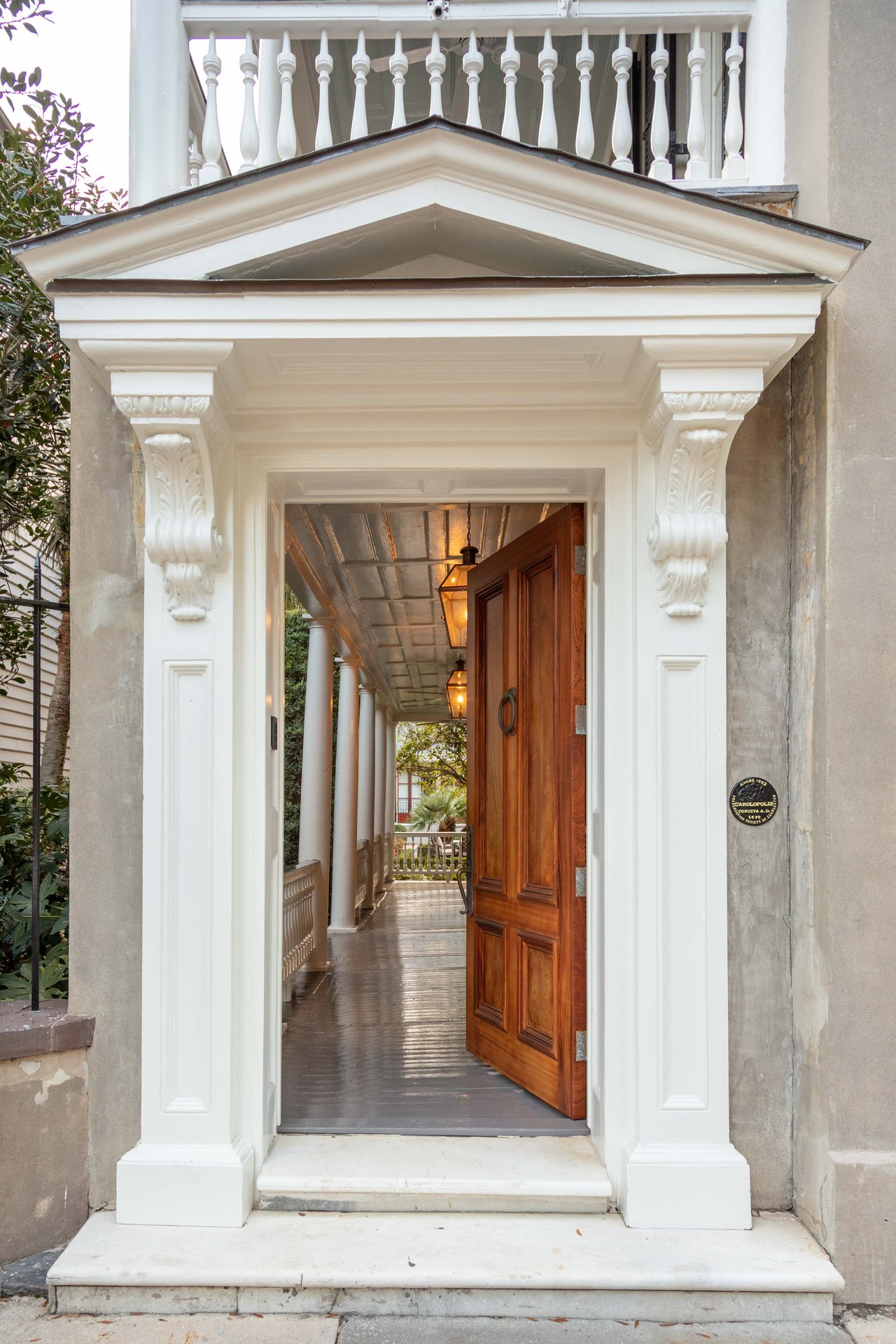
This connection between indoor and outdoor living became part of Charleston's social culture. A piazza could provide a comfortable gathering space while still offering a sense of privacy from the street. One of the most interesting features is the traditional piazza door. From the sidewalk, it can look like the home's front door, but opening it actually leads onto the outdoor piazza rather than directly inside. The Preservation Society notes that this unusual entrance developed alongside the Charleston Single House and its changing residential and commercial uses.
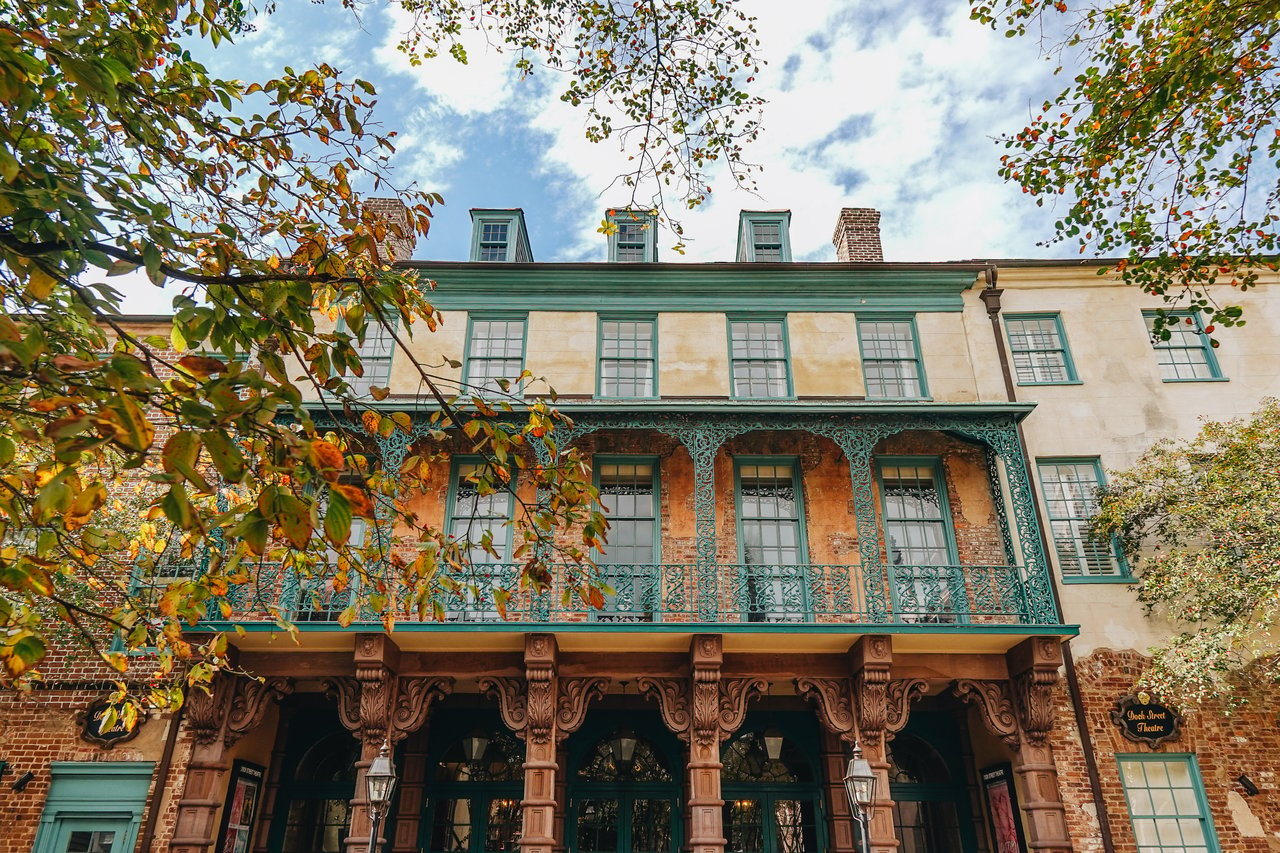
These details are part of what makes Charleston architecture so recognizable. From Georgian homes to Greek Revival and Victorian residences, the city has maintained a unique mix of architectural influences. Charleston’s mix of historic architecture remains one of the defining features of the city. From Charleston Single Houses to other recognizable designs, these architectural styles continue to shape the character of Charleston’s streets today.
Centuries later, piazzas remain an important feature of Charleston homes. Preservation efforts throughout the city have helped protect and restore these historic spaces. In fact, Historic Charleston Foundation recently highlighted the reconstruction of a long-missing piazza on a circa-1732 Tradd Street home, using historic maps, photographs, and physical evidence to recreate the original feature.
The piazza's appeal has also carried into modern Charleston living. Buyers continue to value outdoor spaces for entertaining, relaxing, and enjoying the Lowcountry climate. Even homes that are not traditional Charleston Single Houses often incorporate porches, balconies, courtyards, and other outdoor living areas inspired by the same relationship between home and environment.
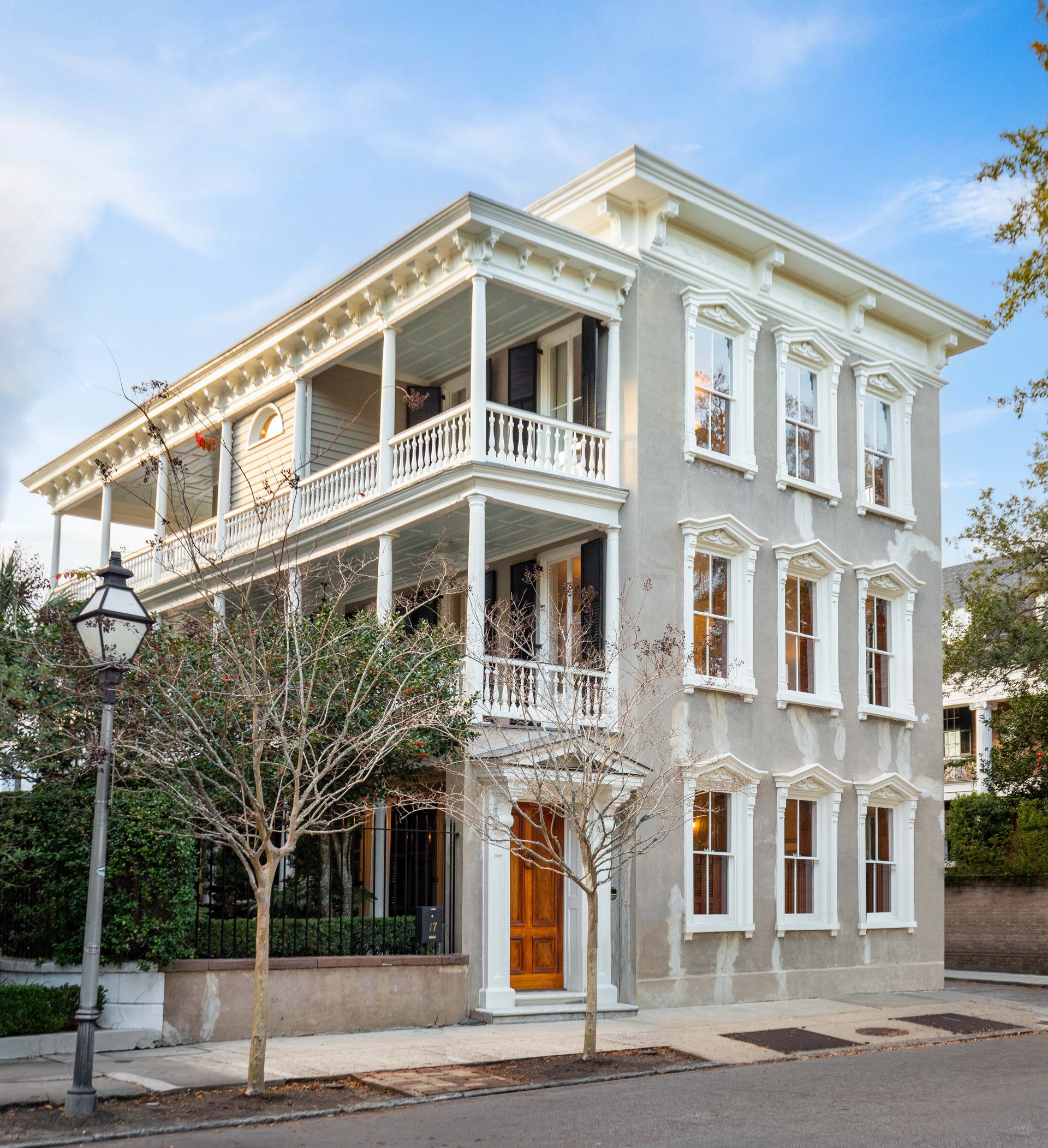
The Charleston piazza is much more than a beautiful porch. What began as a practical architectural feature became an important part of the city's social culture and eventually one of the most recognizable elements of Charleston's historic homes.
From providing shade and catching coastal breezes to creating a gathering place for family and friends, the piazza represents the balance between history and lifestyle that defines Charleston. Even centuries after these porches first became common, their purpose still feels relevant. For homeowners and buyers today, outdoor living remains desirable, making the Charleston piazza not only part of the city's past, but also an enduring part of what makes living in the Lowcountry so special. Check out Handsome Properties listings with historical features!
Handsome Homes
Transforms property buying and selling into a thoughtful, curated, and highly personalized experience, expertly tailored to Charleston’s luxury, historic, and exclusive real estate markets.