Charleston's Newest Downtown Restaurants Are Owned By People Who Never Left
September 24, 2026
September 24, 2026
"The real moment here, though, is the courtyard," Mike Shuler told a Post and Courier reporter last winter, describing the four-season space he and his wife Kathleen are building behind their new restaurant at 40 Broad Street. It's a good line, and an easy one to read past. But it points at something worth sitting with: Shuler isn't a newcomer betting on downtown Charleston. He already owns Blind Tiger Pub two blocks away. He's been here the whole time.
That detail turns out to be the pattern, not the exception. Look closely at who is actually signing leases and pulling permits downtown right now, and the story isn't outside money discovering Charleston. It's the same handful of operators who already have a restaurant on the peninsula, opening a second, third, or fourth one, and doing it almost exclusively inside buildings that have been standing for a century or two rather than anything new.
If you already live down here, you've felt this without naming it. The restaurant scene doesn't feel like it's expanding outward. It feels like it's thickening in place.
Start with Shokudô, which opened on Upper King Street on October 30, 2025, in the space that used to house the Mexican restaurant Maya. It's a robata-and-izakaya concept from chef Masatomo Hamaya, built around a Japanese beer garden modeled loosely on Tokyo's Golden Gai enclave. New menu, new chef, genuinely new idea for the street. But the company behind it is Indigo Road Hospitality Group, the same group that already runs O-Ku, Oak Steakhouse, and Indaco within a few blocks of the new address. Indigo Road didn't discover Upper King. It's been anchoring Upper King for over a decade and just added another flag.
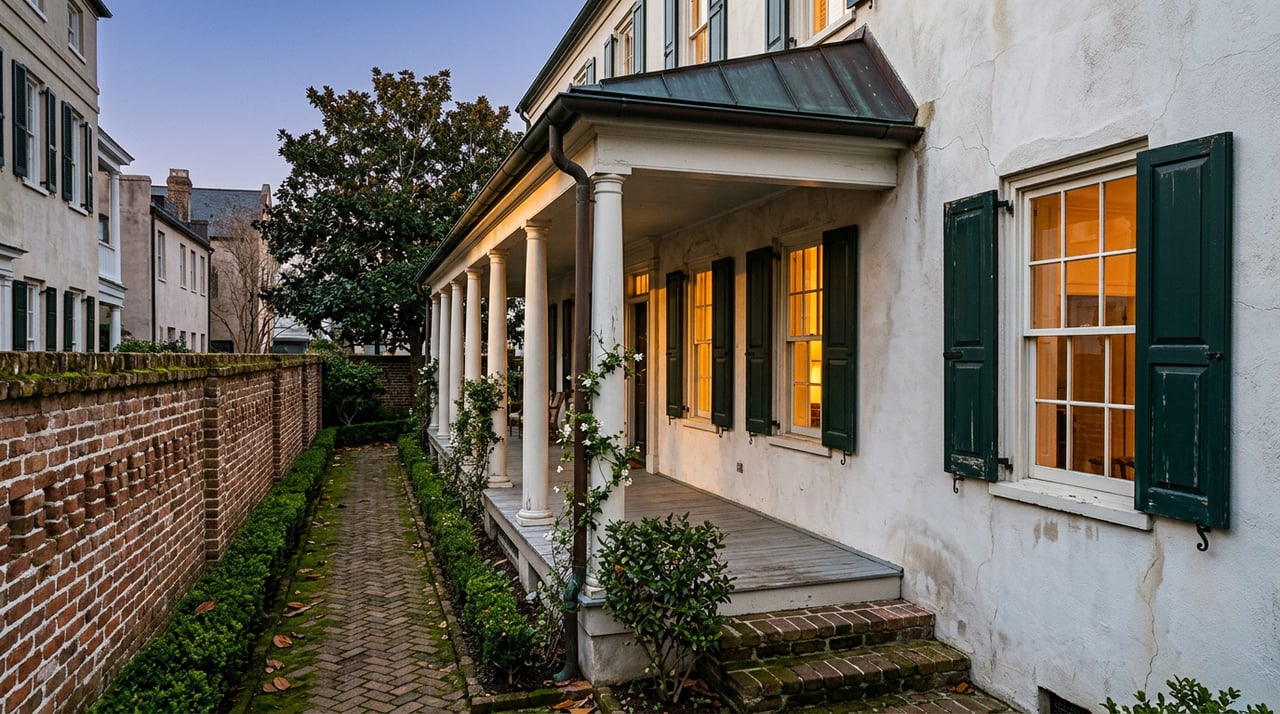
Quarter French follows the same logic from a different direction. The Shulers restored the circa-1806 building at 40 Broad Street, previously home to Brown Dog Deli, working with architect Julia F. Martin to preserve original details like the door hardware. Their partner on the project is Nathan Wheeler of Vintage Lounge, who's designing the wine program and the basement cellar. Three people, all already running Charleston restaurants, put their names on a fourth.
Bareo, the Filipino-Japanese concept serving dumplings and kakigori, comes from the team behind Kultura and Baguette Magic. Same story again. And Babas, the European-inspired cafe now serving pastries and cocktails out of a two-story 1931 brick building on Wentworth Street, is the brand's third Charleston location, not its first.
Here's the operator map as it stands this fall:
None of this is a coincidence of timing. It's what happens when the people who already know a street's rent, foot traffic, and permitting quirks decide the smartest square footage is the empty storefront next to the one they already run.
The second half of the pattern is where the buildings themselves come in. Downtown Charleston doesn't have vacant lots to speak of, so growth here has always meant reoccupying something. What's notable is how much of this current wave is choosing the oldest, least turnkey option available rather than a newer build that would be cheaper to convert.
Quarter French's building dates to 1806. Babas' third location is inside a structure from 1931. And a few blocks away, on King Street near Simons, architect Tyler Smyth is converting a church school that's sat vacant for roughly a decade into eleven small business suites and a 1,600-square-foot restaurant with a patio. Post and Courier photographed the construction in June, with original stairwell details from the old school still visible mid-renovation.
None of these are easy projects. A 220-year-old building comes with structural surprises, historic district review, and a renovation timeline that can slip by seasons rather than weeks, which may be part of why Quarter French's spring 2026 opening had turned into "coming soon" signage by midsummer rather than an open door. Buildings like this take longer than a spec sheet ever admits. The operators taking them on anyway are making a specific bet: that a restored 1806 storefront is worth more to a Broad Street crowd than a faster build-out somewhere less encumbered.
Kaia is the exception that makes the rule visible. Opening at 186 Coming Street, it's led by chef and partner Raheem Sealy, a St. Croix native whose résumé includes recognition from the James Beard Foundation and a nod from the World's 50 Best Restaurants list. Unlike the operators above, Sealy doesn't already have a Charleston address on his other business cards. His menu blends Caribbean flavors with Asian technique, wood-fired cooking, and a sharing-forward format that reads as genuinely new to the street rather than a fourth location with a different name.
Kaia matters here precisely because it's rare. When nearly every other opening this cycle traces back to an existing local operator, the one address that doesn't is the one worth watching, both for what it adds to Coming Street's food options and for what it says about how selectively outside talent is choosing to plant itself downtown right now.
For a resident, the practical takeaway isn't which restaurant to try first. It's where the corridors are actually thickening, because that's where your weeknight radius just got smaller.
Broad Street, between Blind Tiger Pub, Le Chambertin, The Establishment, and Oak Steakhouse, was already a compact evening strip. Quarter French, whenever its doors finally open, fills one more storefront in that same short stretch, which means Broad is becoming less a street you pass through and more a street where you can start with a drink and end with dinner without moving your car.
Upper King's Indigo Road cluster just added a fifth address to a corridor that already had four, while Mother's Ruin has taken over the space vacated when The Rarebit closed in December, keeping that particular storefront from sitting dark. A few blocks south, Sonder Wine Bar opened on Cannon Street serving pours and snacks Wednesday through Monday, giving the Cannonborough side of downtown an afternoon-into-evening option it didn't have before.
And King and Simons, which has functioned as a dead corner for most of a decade, is about to become a small commercial hub with a restaurant and storefronts built into what used to be classrooms. That's not a new restaurant so much as a new reason to walk that block at all.
None of this requires a car, a reservation strategy, or advance planning beyond checking which of these has actually opened its doors by the time you read this. What it does confirm is that the people investing real capital and multi-year renovation timelines into downtown Charleston right now are, almost without exception, the same people who already bet on it once.
If you're the kind of resident who tracks these changes because you're weighing whether your own address still fits the way downtown is evolving, that's a conversation worth having with someone who watches this market as closely as you watch your own block. Handsome Properties works with downtown owners on exactly that question, and a free home valuation is a low-pressure way to start it.


Transforms property buying and selling into a thoughtful, curated, and highly personalized experience, expertly tailored to Charleston’s luxury, historic, and exclusive real estate markets.