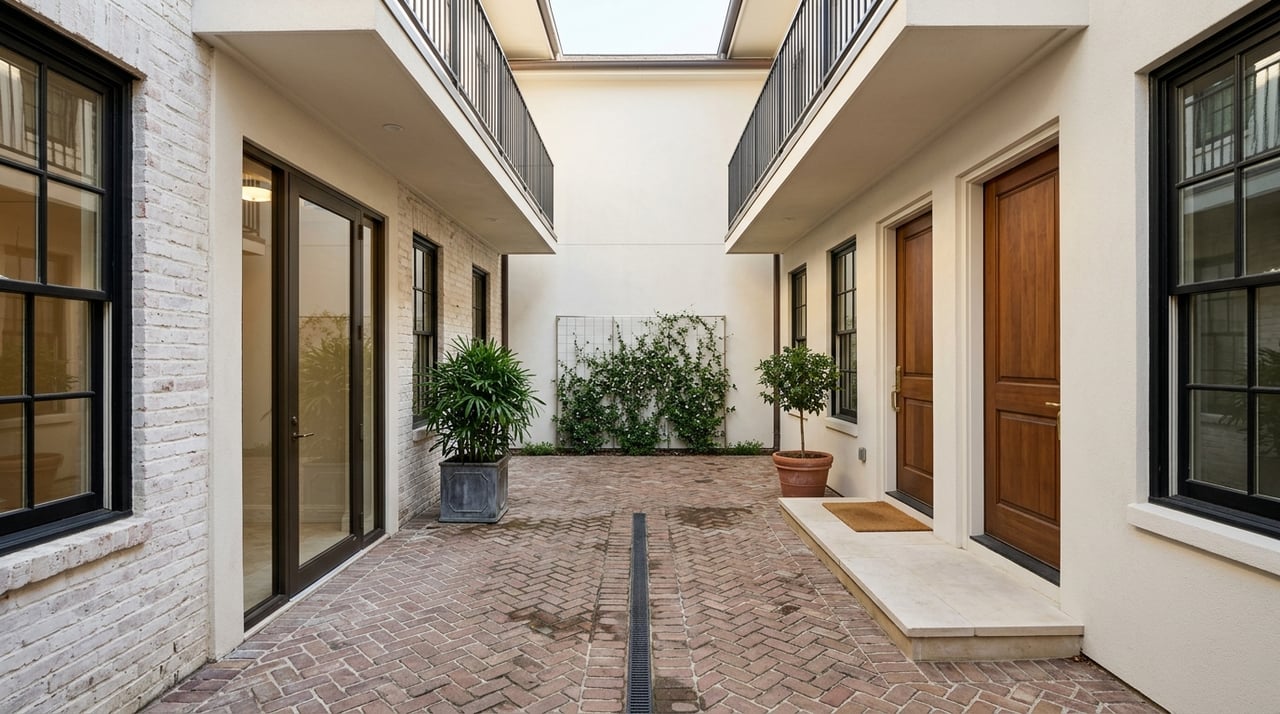
Condo Or Townhome In Downtown Charleston? How To Choose
July 2, 2026
July 2, 2026
Trying to choose between a condo and a townhome in Downtown Charleston can feel simple at first, until you realize the label on a listing does not always tell the full story. If you want walkability, historic character, and a home that fits how you actually live, the details behind ownership, fees, parking, and exterior rules matter just as much as the floor plan. This guide will help you compare both options with more confidence so you can make a smart decision for your life in downtown. Let’s dive in.
In Downtown Charleston, the biggest difference between a condo and a townhome is often not the look of the property. It is the legal structure behind it. That structure affects what you own, what you maintain, what you pay each month, and how the property may be financed or sold later.
In South Carolina, a condominium is an individually owned unit paired with shared ownership in the common elements. State law also requires condo owners to contribute to the costs of administration, maintenance, and repair for those shared elements, and the association has a lien remedy for unpaid assessments. In practical terms, when you buy a condo, you are also buying into the association’s rules, finances, and maintenance system.
A townhome, by contrast, is often described by its style rather than its legal setup. It may be fee simple, part of a planned community, or legally structured as a condo project. That means two attached homes that look similar on the outside can come with very different responsibilities on paper.
A listing that says “townhome” may still be subject to condominium ownership rules. That is why the recorded declaration, bylaws, and title documents matter more than the marketing language. If you are comparing options downtown, this is one of the first things to verify.
Once you understand the legal structure, the next question is how each option feels day to day. In a place like Downtown Charleston, where historic streets, limited parking, and shared walls are all part of the landscape, small differences can shape your experience in a big way.
Condo living usually includes more shared systems and more association oversight of exterior spaces and common areas. Condo fees commonly cover items such as building exteriors, common areas, water, sewer, trash, insurance, and reserves. Those costs are paid separately from your mortgage, so they should be part of your monthly budget from the start.
If you like a more hands-off ownership experience, this setup can be appealing. You may have fewer exterior maintenance tasks to manage yourself, which can be especially helpful if downtown is a second home or part-time residence.
Townhomes often feel more like a traditional home, especially if the property is fee simple. You may have more direct responsibility for certain exterior elements, but you may also enjoy a greater sense of separation and control, depending on the governing documents.
That said, some townhomes still have HOA dues and shared obligations. What those dues cover can vary widely, so it is important not to assume a townhome always means lower monthly costs or fewer rules.
A lower list price does not always mean lower ownership cost. In Downtown Charleston, monthly dues, reserve strength, insurance requirements, and possible special assessments can change the financial picture quickly.
A condo building with more shared amenities or more extensive common-area services will often carry higher fees because the association has more to maintain and insure. A simpler attached-home community may have a lighter fee structure, but that depends on the project’s legal setup and maintenance responsibilities.
When you compare a condo and a townhome, ask:
Special assessments can have a major effect on affordability. If a building or community needs repairs, upgrades, or added insurance funding, owners may be required to contribute more. For a downtown buyer, that makes association finances an essential part of due diligence.
In many markets, parking is helpful. In Downtown Charleston, it can be a deciding factor. Before you fall in love with a space, make sure you understand exactly how parking works.
The City of Charleston states that on-street meters operate Monday through Saturday from 9:00 a.m. to 6:00 p.m. Downtown residents in Peninsula Parking Districts may be able to obtain a Residential Parking Decal, and many downtown garages are owned or operated by parties other than the City. That means parking arrangements can vary quite a bit from one property to the next.
When comparing homes, find out:
Downtown Charleston’s architectural character is a major part of its appeal, but it also comes with added review for exterior changes. This is important whether you are considering a condo or a townhome.
Charleston’s Board of Architectural Review oversees new construction, alterations, and renovations that are visible from the public right-of-way within historic districts. In some cases, even smaller items like painting or rot repair may require staff review.
If you buy downtown, exterior decisions may be limited by:
In Charleston, flood review is not optional. The City of Charleston states that all properties in the city are in a flood zone, even though not all are in FEMA’s Special Flood Hazard Area.
Most lenders require flood insurance for structures in the Special Flood Hazard Area, and a standard homeowners policy does not cover flood damage. The City also notes that NFIP policies have a 30-day waiting period before coverage begins, so timing matters.
Whether you choose a condo or a townhome, ask for:
Your future buyer may care about many of the same things you do now. That is why the best choice is often the one that makes sense both for your lifestyle today and for marketability later.
For condos, resale strength often depends on the condition and finances of the building or community. Lenders may evaluate physical condition, financial stability, outstanding debt tied to structural integrity, pending lawsuits, and whether required inspections have been completed.
A downtown condo with solid reserves, manageable dues, clear parking, and no major assessment history is usually easier to understand and evaluate than one with weak finances or recurring surprises.
A townhome may appeal to buyers who want attached-home living with a more house-like feel. Still, resale and financing depend on whether the property is fee simple, part of a planned community, or legally a condo project.
That is why the smartest comparison is not condo versus townhome in the abstract. It is one specific property versus another, with the governing documents and ownership structure in hand.
If you are weighing a condo against a townhome in Downtown Charleston, use this checklist before you decide:
A condo may be the better fit if you want simplified exterior maintenance, shared amenities, and a more lock-and-leave ownership model. That can be especially attractive if you are buying a second home or want less day-to-day upkeep.
A townhome may suit you better if you want an attached home that feels a bit more independent. But in Downtown Charleston, you still need to verify whether that independence is real in legal and financial terms, or just part of the marketing language.
The best choice comes down to how you want to live, how much complexity you are comfortable managing, and how carefully the property’s documents support that vision. In a market as nuanced as downtown Charleston, those details are where smart decisions are made.
If you are comparing downtown condos and townhomes and want a clear, property-by-property perspective, the team at Handsome Properties can help you evaluate ownership structure, preservation considerations, and the practical details that shape long-term fit.





Handsome Homes
Transforms property buying and selling into a thoughtful, curated, and highly personalized experience, expertly tailored to Charleston’s luxury, historic, and exclusive real estate markets.