In Mount Pleasant's Old Village, the 'Average' Home Price Depends on Which Site You Ask
August 13, 2026
August 13, 2026
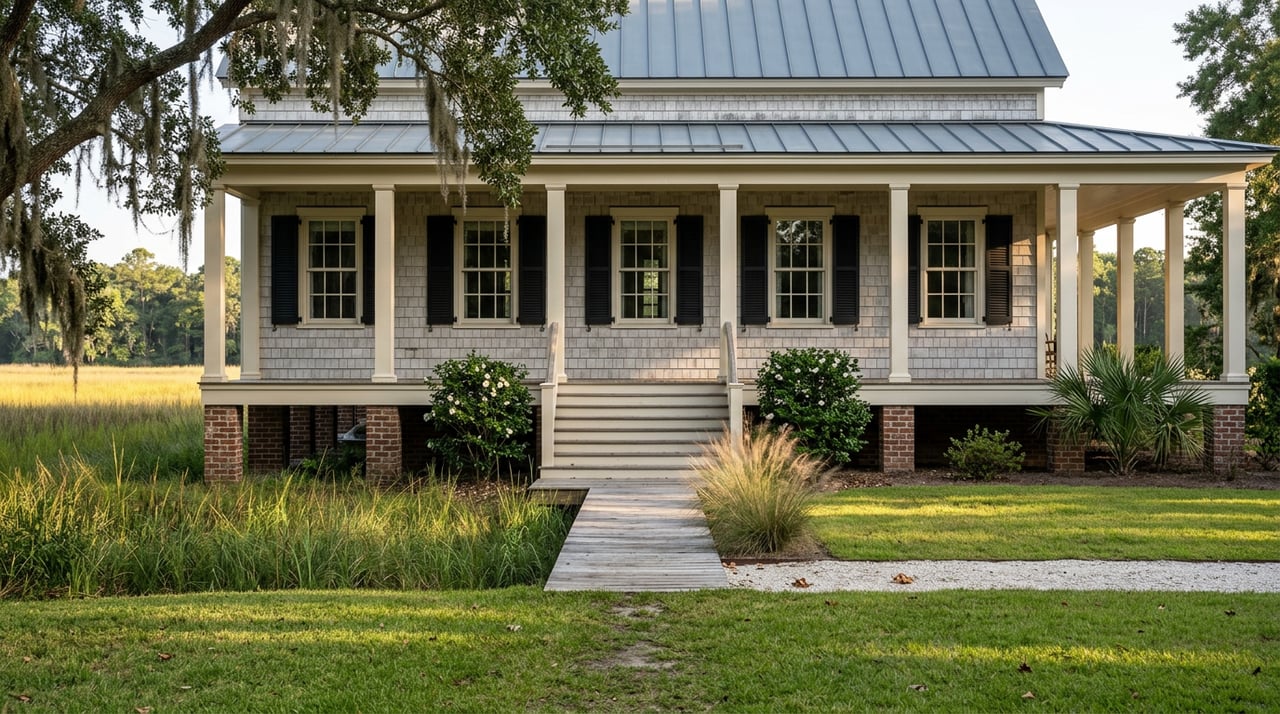
In the fall of 2025, a deepwater estate on Mount Pleasant's harbor bluff sold for $14 million, the second-highest residential sale in the town's history. It had six bedrooms, a private dock with a boat lift, and a covered brick terrace with a wood-burning fireplace. It also did something less visible but more consequential for anyone watching Old Village prices from a distance: it single-handedly bent the neighborhood's average.
That is the story Old Village's price data keeps telling, whether anyone means it to or not. This is a market so small that one sale can move the numbers by hundreds of thousands of dollars, which means the "average price" you see on any given site is less a fact about the neighborhood and more a snapshot of whoever happened to close that month.
Pull up Old Village pricing from a handful of sources this year and you will get four different pictures of the same streets between Pitt Street and Charleston Harbor.
| Source | Time window | Average price | Median price | Days on market |
|---|---|---|---|---|
| Neighborhood-level housing data | 3 months ending May 2026 | $2.85M (down 30.3% year over year) | $4.1M (up 165.9% year over year) | 170 |
| One local team's MLS pull | As of March 25, 2026 | $3.18M | not reported | 118 |
| A national portal's snapshot | Mid-2026 | not reported | $1.57M (up 1% year over year) | 52 |
| A longtime Old Village-focused blog | CTAR MLS data, Jan. 1 to May 14, 2026 | roughly $2.3M | not reported | not reported |
None of these numbers are wrong. They are measuring a market where only four homes sold in all of May 2026, down from five the year before. When your sample size is that small, the difference between an average and a median stops being a rounding error and becomes the whole story. A $12.5 million listing and a $700,000 cottage sale in the same quarter will produce wildly different averages depending on which one happens to close first.
Zoom out to Mount Pleasant as a whole and the same pattern holds, just with more data points to smooth it over. Town-wide, the median sale price in early 2026 sat closer to $838,000 to $850,000, while the average is often quoted near $1.1 million. The gap between those two numbers is not noise. It is Old Village and a handful of other harbor-adjacent streets pulling the average upward while the median reflects what a typical buyer in Carolina Park or Snee Farm actually pays.
Averages are sensitive to outliers. Medians are not, or at least not as much. In a market with hundreds of monthly sales, one $14 million estate barely nudges the average. In a market with four sales, it can double it.
Old Village has maybe a dozen active listings at any given time, according to one team's March 2026 count, against 42 active listings reported elsewhere by midyear. Either way, this is not a market you can read the way you'd read Charleston County as a whole. A single closing, especially a waterfront one, can make the neighborhood look like it appreciated 165 percent year over year or cratered 30 percent over the same period, depending on which three-month window you happen to be looking at and which property happened to change hands inside it.
If you're comparing Old Village against I'On, Dunes West, or Carolina Park using headline average prices alone, you're comparing a coin flip against a poll of a thousand voters. The comparison isn't meaningless. It just needs a different kind of scrutiny than the one you'd apply to a bigger, more liquid neighborhood.
The second thing that gets lost in Old Village's average price is what "waterfront" is actually buying you. Not every home that touches Shem Creek or the harbor comes with a usable, or expandable, private dock. Dock rights are their own asset, gated by a permitting process that runs on a separate clock from the sale itself.
According to American Dock, dock permitting in the Charleston area typically runs four to six months from application to permit in hand, which is why it pays to start the process well before closing rather than after.
South Carolina Department of Environmental Services's own permitting rules add a wrinkle that catches a lot of Old Village buyers off guard: on creeks narrower than 20 feet, a new dock can only be permitted if the property has at least 500 feet of water frontage, or if there is no possible dock site on the opposite bank. Where that exception doesn't apply, the state caps the structure at 50 square feet and rules out boatlifts. If the property sits in a subdivision, the state also keeps approved Dock Master Plans on file, worth checking before you assume a lot is eligible at all.
This is exactly why one recent Old Village listing on Mary Street, overlooking the harbor, called out "dock permit in hand" as a headline feature, separate from the water frontage itself. The permit was the asset. The view was just the view.
If you're comparing Old Village to other Mount Pleasant neighborhoods, treat any single average or median figure as a starting point, not a verdict. Ask what window of time it covers, how many sales are behind it, and whether a single outlier closing is doing the heavy lifting. A neighborhood where four sales define a quarter's median is not comparable, apples to apples, to one where forty sales do.
If you're evaluating a specific waterfront property, separate the land from the dock rights in your own head before you separate them in a negotiation. A permit already in hand, or a documented Dock Master Plan that shows the lot is eligible, is worth asking about directly and worth pricing accordingly. A property without either is not disqualified, but it is carrying four to six months of uncertainty that a comparable property with paperwork in place does not.
And if you're selling, the same logic cuts the other way. A pending dock permit, or a completed one, is a fact worth stating plainly in your listing rather than folding into a general "waterfront" description. In a market this thin, specifics move faster than adjectives.
Does every Old Village home on the water come with the right to build a dock? No. Dock rights depend on creek width, frontage, and whether an approved Dock Master Plan exists for the subdivision.
Why do average and median prices diverge so much in this specific neighborhood? Because so few homes sell here in any given quarter. A handful of transactions, especially when one is a multimillion-dollar outlier like a recent harbor bluff estate, can swing the average without moving the median much, or the reverse. Wider Mount Pleasant data shows the same pattern at a smaller scale, with the town-wide median running well below the town-wide average for the same reason.
How long should a buyer budget for dock permitting after closing? Plan on four to six months.
If you're weighing Old Village against another Mount Pleasant neighborhood, or trying to figure out what a specific waterfront listing's price actually reflects, Handsome Properties can walk through the permit history and comparable sales with you directly. Get a Free Home Valuation to see where your current property or target neighborhood actually stands, beyond whatever number the last website showed you.
This article is general information, not legal, tax or financial advice. Consult a qualified professional about your situation.

Handsome Homes
Transforms property buying and selling into a thoughtful, curated, and highly personalized experience, expertly tailored to Charleston’s luxury, historic, and exclusive real estate markets.