Broad Street is a cornerstone of Charleston’s history, dating back to 1680. Originally designed as a wide street to help prevent the spread of fires in the early city, it grew into a hub of civic, legal, and cultural life. Lined with historic buildings and notable landmarks, it reflects the city’s enduring commitment to preservation and tradition.
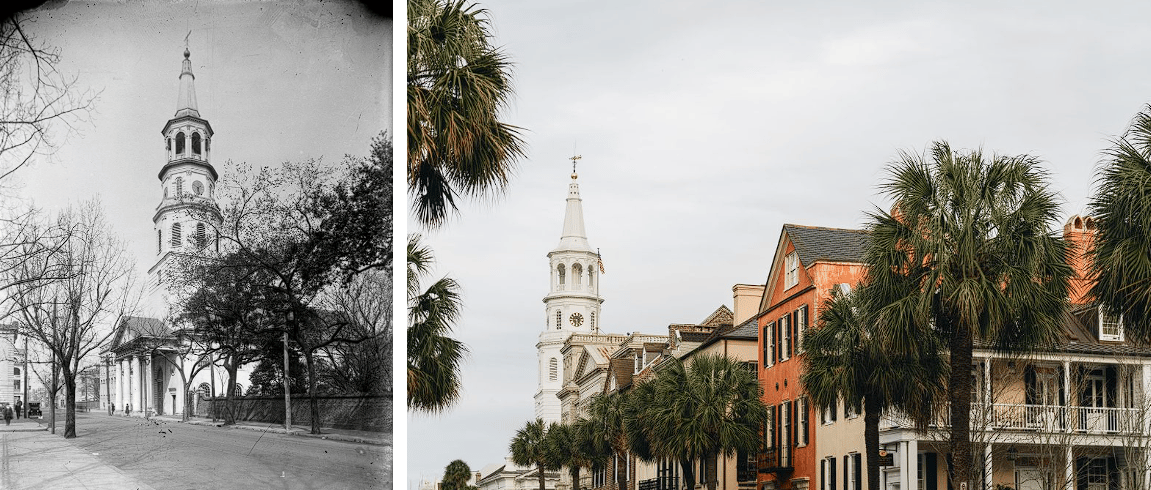
Left Image Courtesy of The Gibbes Museum of Art/Carolina Art Association
General History of Broad Street
Overview of Historical Development
Broad Street was laid out in 1680 as part of the “Grand Modell” plan for Charles Towne. Originally called Cooper Street, its wide design served as a firebreak in the early walled city, offering protection and influencing future urban planning. As the city grew, Broad Street became a central hub of activity. It hosted homes, taverns, businesses, banks, and government offices.
Milestones
During the Civil War, Broad Street suffered damage and economic strain, but many structures survived. Law firms and financial institutions helped the area recover during Reconstruction, maintaining its importance in city life.
In the 20th century, preservation efforts took hold. The Preservation Society of Charleston was founded in 1920, leading to historic zoning laws and the creation of the Board of Architectural Review. Later plans in 1974 and 1999 further supported preservation and revitalization.
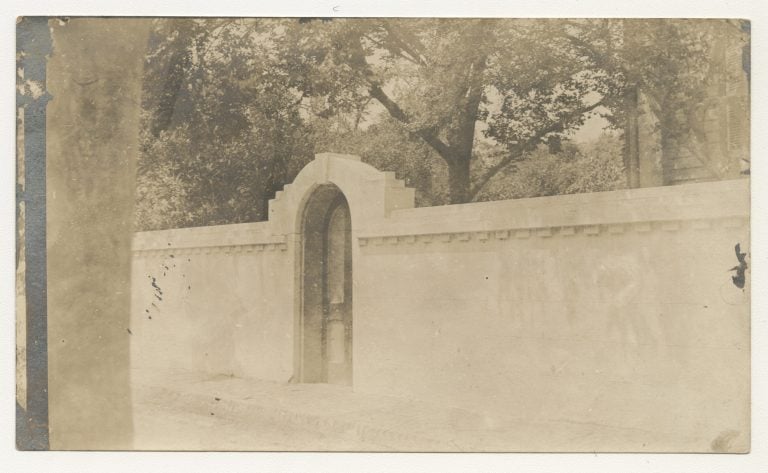
Image Courtesy of The Gibbes Museum of Art/Carolina Art Association
Architectural and Civic Importance Over Time
Broad Street features a mix of historic architecture, including Georgian, Federal, and Greek Revival styles. Iconic buildings like the Edward Rutledge House and the Old Exchange and Provost Dungeon highlight its national significance.
The street remains a civic center, with buildings like City Hall and the courthouses still serving their original roles. This continuity reflects Charleston’s strong preservation efforts and long-standing civic identity.
Inclusion in the Charleston Historic District in 1966 cemented Broad Street’s role as a symbol of the city’s past. Its buildings and institutions continue to reflect Charleston’s architectural beauty and historic purpose.
Spotlight Locations
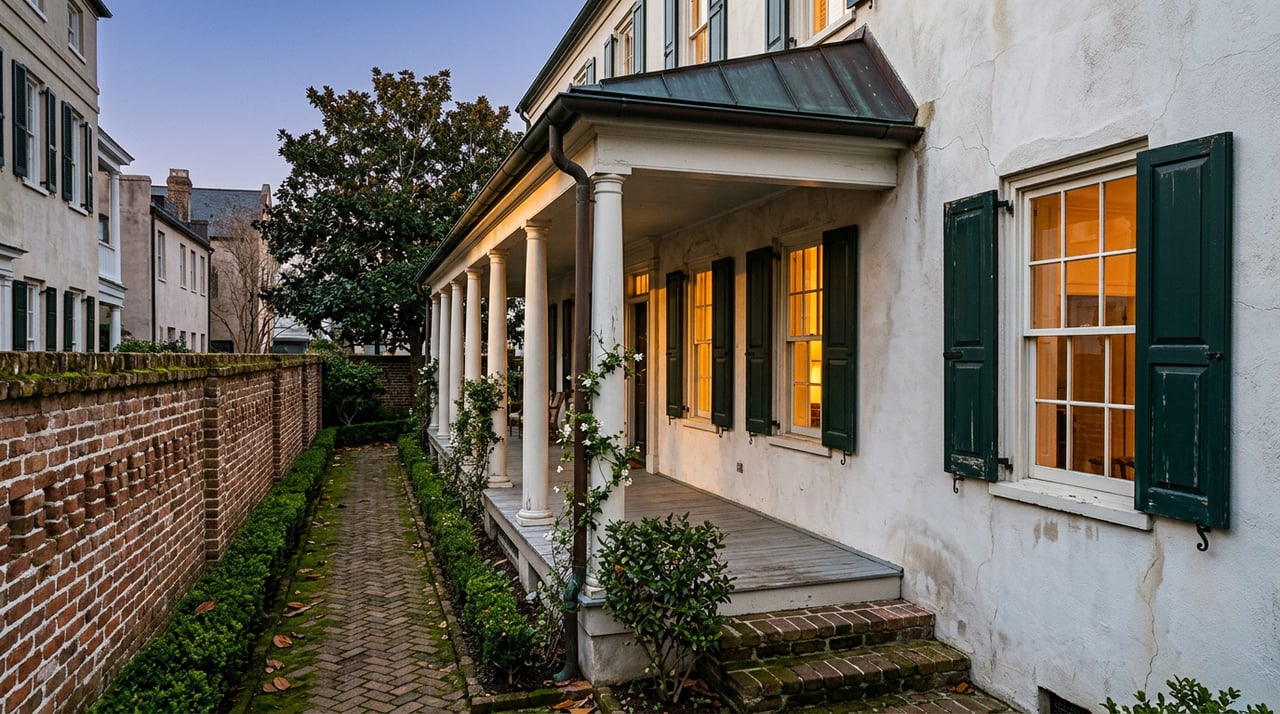
Edward Rutledge House
Built around 1760, the Edward Rutledge House—now known as The Governor’s House Inn—is one of Charleston’s most historically significant residences. It was home to Edward Rutledge, a signer of the Declaration of Independence and later Governor of South Carolina.
Rutledge lived here during pivotal moments in American history, including his time as a delegate to the First Continental Congress and his capture during the 1780 Siege of Charleston. Designated a National Historic Landmark in 1971, the house operated as a bed and breakfast, preserving its 18th-century charm while offering guests a stay steeped in Revolutionary history. However, following its recent sale, it is unclear whether the property will remain an inn or be converted into a private residence.
Blind Tiger Pub
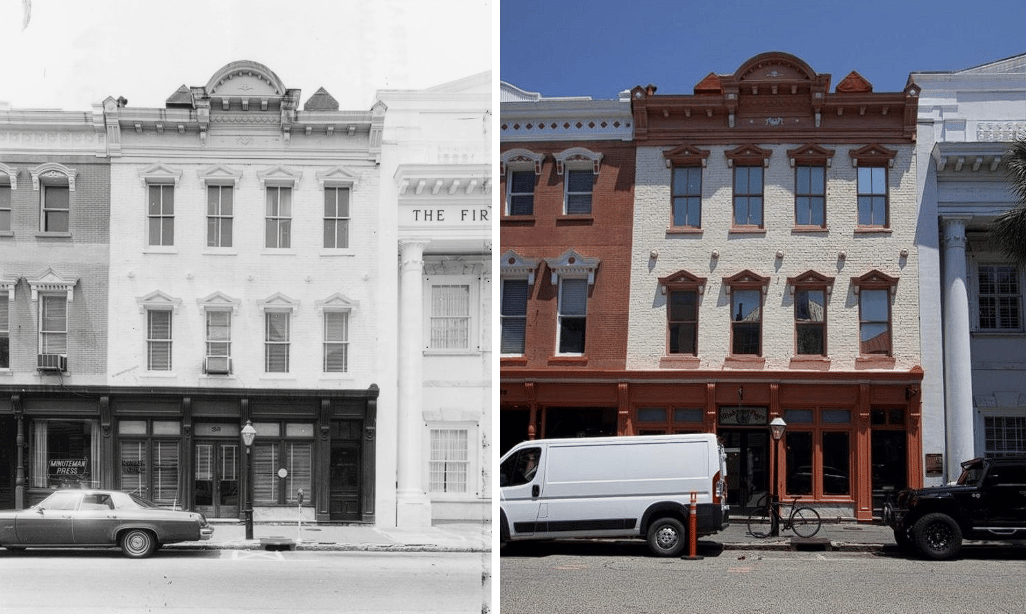
Left photo, Courtesy of the Charleston County Public Library.
Opened in 1992, the
Blind Tiger Pub honors the illicit “Blind Tiger” speakeasies that emerged in Charleston during the 1890s as defiant responses to South Carolina’s restrictive dispensary laws. Figures like Governor Ben Tillman and local legend Vincent Chicco, the so-called “King of the Blind Tigers,” are closely tied to this rebellious era.
Located in a historic Broad Street building with rumored underground tunnels and a haunted reputation, the pub blends local folklore with charm. Renovated in 2016, it now offers a modern experience while preserving the spirit of Charleston’s speakeasy past.
Old Exchange and Provost Dungeon
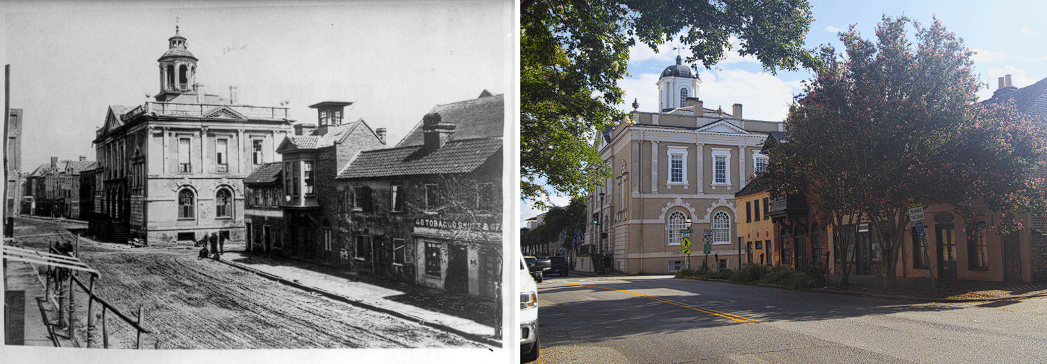
Left photo, Courtesy of the Charleston County Public Library.
Built between 1767 and 1771, the
Old Exchange and Provost Dungeon is one of Charleston’s most storied landmarks. Originally a custom house, it later played a pivotal role in the American Revolution as a British prison for American patriots. The building hosted key moments in U.S. history, including the 1788 debates to ratify the Constitution and a visit from George Washington in 1791.
It also endured damage during the Civil War and the 1886 earthquake. Preserved by the Daughters of the American Revolution since 1913, it now operates as a museum, where visitors can explore Charleston’s revolutionary past and tales of pirates, patriots, and prisoners.
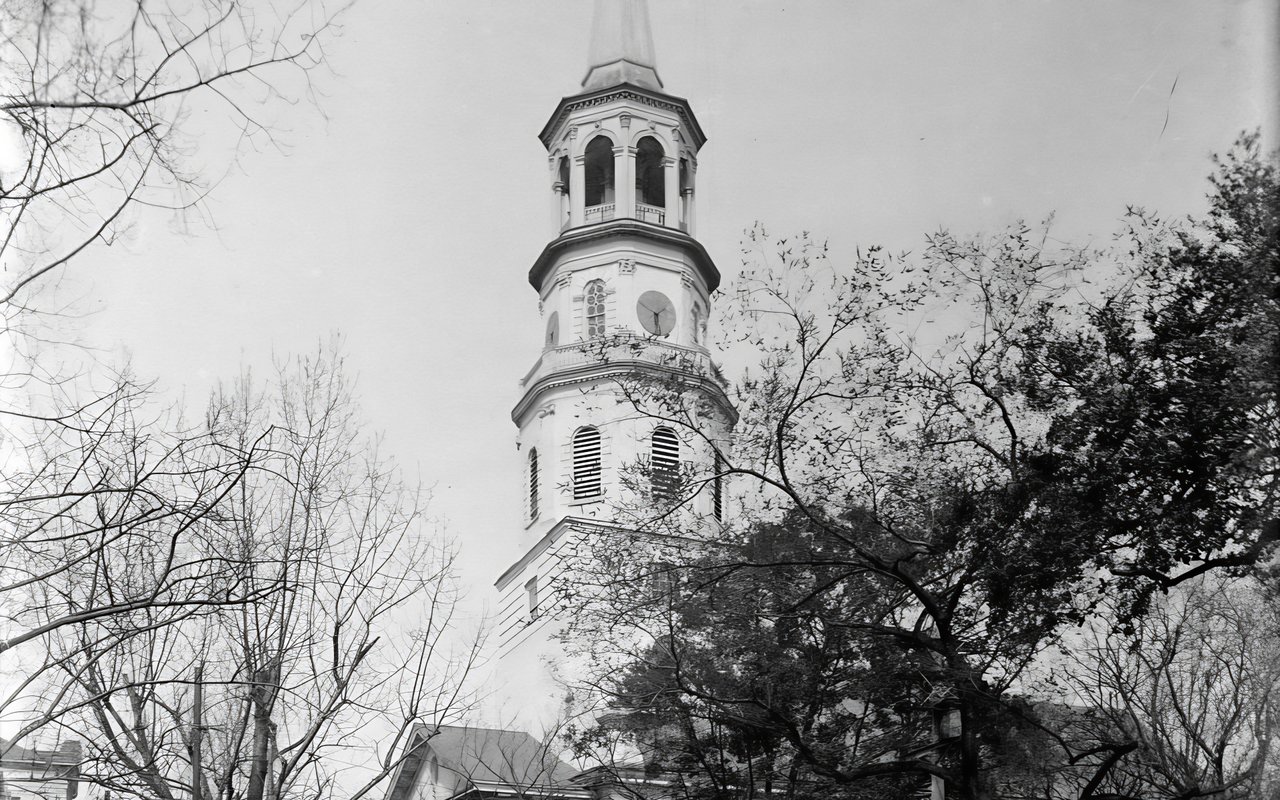
St. Michael’s Episcopal Church
Constructed between 1752 and 1761,
St. Michael’s Episcopal Church is the oldest surviving religious structure in Charleston and a prominent National Historic Landmark. Located at the famed “Four Corners of the Law,” the church has long stood at the intersection of civic and spiritual life in the city.
Its iconic steeple and imported English bells—captured during the Revolutionary War and later returned—symbolize its resilience through centuries of conflict and change. Designated a National Historic Landmark in 1961 and listed on the National Register of Historic Places in 1966, St. Michael’s also serves as the final resting place for notable historical figures, including two signers of the U.S. Constitution.
Broad Street remains a vibrant symbol of Charleston’s rich past and ongoing legacy. Its historic architecture, important civic buildings, and cherished local businesses continue to tell the story of a city that honors its heritage while embracing the future.