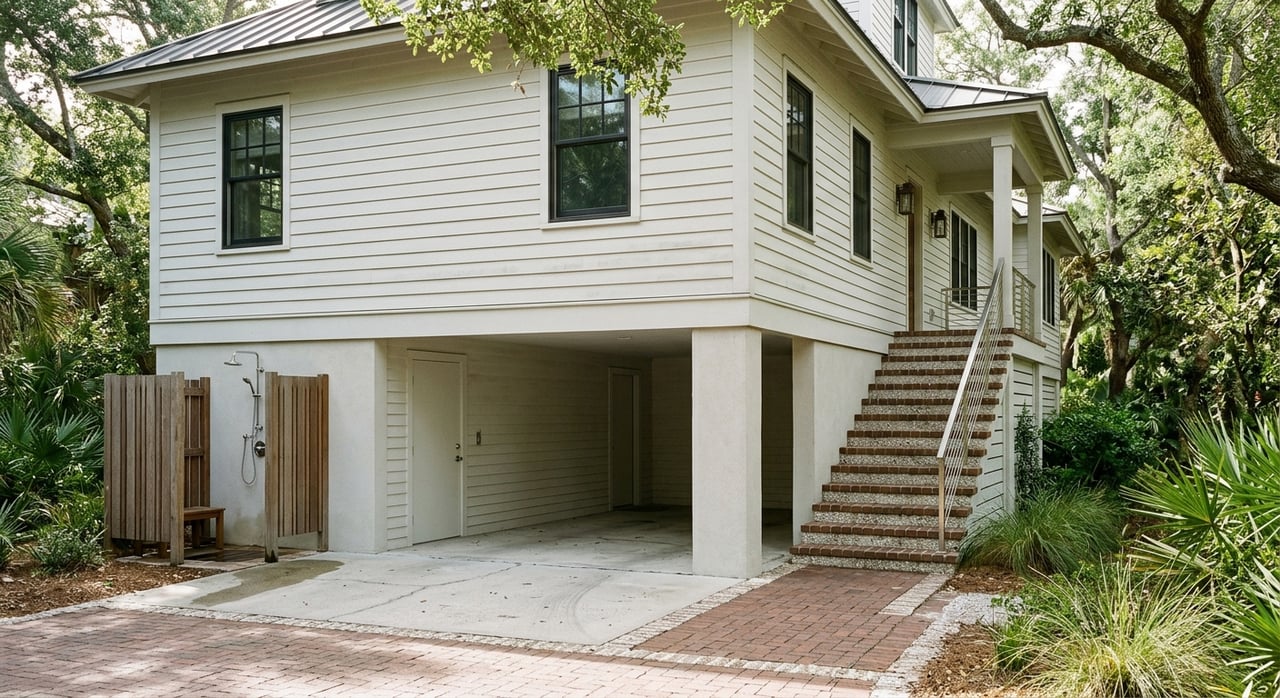
What to Know About Kiawah Seabrook Second Home Ownership
May 14, 2026
May 14, 2026
If you are considering a second home on Kiawah or Seabrook Island, the view is only part of the story. These two barrier-island communities offer a distinctive coastal lifestyle, but ownership here also comes with association rules, tax planning decisions, rental frameworks, and storm-readiness costs that deserve just as much attention as floor plans and beach access. A clear understanding of how these pieces fit together can help you buy with confidence and own with less stress. Let’s dive in.
Kiawah Island and Seabrook Island are both private, association-driven communities, which means ownership involves more than the property itself. On Kiawah, all property owners are members of KICA. On Seabrook, all owners become members of SIPOA at purchase.
That matters because both associations help shape daily ownership. Community services, common-area maintenance, infrastructure support, and access-related systems are part of the ownership experience, and those costs are funded through assessments and related fees.
For many second-home buyers, this is the first major mindset shift. You are not just buying a coastal house or villa. You are also buying into a governed island environment with established rules, shared infrastructure, and a predictable layer of carrying costs.
A second-home budget on Kiawah or Seabrook should include more than your mortgage and Charleston County property taxes. You will also want to account for annual association assessments, insurance, transfer-related fees at closing, and any optional lifestyle expenses that come with club membership.
Recent association figures provide a useful benchmark. KICA reported 2025 combined assessments of $3,057 for an improved property and $1,528.50 for an unimproved property. SIPOA lists a 2026 annual assessment of $3,133 for developed property and $1,723 for undeveloped property.
These are association costs, not county property taxes. They support services and long-term community needs such as infrastructure repairs, reserves, drainage work, road repaving, security, recreation, and other common-property upkeep.
In addition to the purchase price, both islands have ownership transfer costs tied to the association structure.
These fees are important to understand early, especially in the luxury segment where even a small percentage can become a meaningful line item.
One of the most important early decisions is how the property will function in your life. Will it be a personal retreat, a part-time getaway with some rental use, or a property you plan to rent regularly? That answer can affect both your tax treatment and your ownership logistics.
Charleston County states that a primary legal residence may qualify for the 4% assessment ratio, while other real estate is generally assessed at 6%. The county also says that if a residence is rented more than 72 days in a calendar year, it does not qualify for the 4% ratio that year.
For most second homes, the default tax treatment is usually the 6% assessment ratio. That makes usage planning especially important before you buy, not after. A home that feels like a flexible lifestyle purchase can quickly become more operational if rental income is part of the plan.
If you expect the home to be used mainly by you, your focus may be on ease of ownership, storm preparation, and reliable property checks while you are away. If you plan to mix personal use with rentals, you will also need a system for guest access, vendor coordination, compliance with island rules, and local response when issues come up.
This is where a practical plan matters as much as the home itself. Second-home ownership works best when your usage strategy, your budget, and your support team are aligned from the start.
Both islands have detailed community standards, and those rules matter whether you are using the property yourself or allowing guests or renters to use it. Beach access, parking, noise, gate entry, and general conduct are not casual details here. They are part of the managed environment that helps these communities function.
On Kiawah, community rules for homes used by guests or renters are especially specific. Rental occupancy is limited to two occupants per bedroom plus two additional occupants per dwelling unit. Parking on grass or landscaped areas is prohibited, overnight parking must be off-street, and quiet hours and decibel limits vary by day and time.
Seabrook has its own barrier-island rules as well. The town prohibits beach driving, overnight storage of beach equipment, fires and fireworks on the beach, and it applies seasonal pet restrictions and leash requirements.
For second-home owners, the practical takeaway is simple. If you plan to share the home with guests or generate rental income, you need a clear process for communicating and enforcing these rules.
While both islands regulate access and use, the rental framework is not identical.
KICA defines short-term rentals as fewer than 30 consecutive days. Renter access is managed through the gate system. Agency rental companies can issue passes to renters, while owner-managed rentals request passes through KICA Security.
KICA also notes that renter guest access passes are issued for one day only. In addition, commercial businesses, contractors, service providers, vendors, and delivery companies must buy gate passes and provide registration, insurance, and a driver’s license.
For owners, this makes access management a real part of rental operations. If you are not local, a trusted rental company or owner representative can be especially valuable.
On Seabrook, all rental properties must be registered with SIPOA before the first rental, whether they are long-term or short-term. Rental host registration is annual, and the number of rental passes per property equals the number of bedrooms in the home.
For long-term rentals, SIPOA states that gate passes currently cost $200 per vehicle pass for 180 to 365 nights. Seabrook also has a more explicit town-level short-term rental framework for stays under 30 consecutive days.
The town requires a business license and a separate Short-Term Rental Permit, with each unit needing its own permit. The application also requires a local contact or authorized agent within 50 miles who can respond within two hours.
In simple terms, Seabrook currently has a more permit-driven short-term rental structure, while Kiawah leans more heavily on association gate access and operating rules. On both islands, though, the message is the same: local management matters.
If you will not be on-site regularly, you need someone who can handle passes, vendor access, inspections, guest support, and issue response. For many absentee owners, that operational support is what turns a second home from a burden into a pleasure.
On a South Carolina barrier island, insurance should be treated as a core ownership cost, not an afterthought. The South Carolina Department of Insurance says standard homeowners policies generally do not cover flood damage, including storm surge, and separate flood coverage is needed.
Its guidance also notes that coastal owners may need more than one policy, including wind coverage and a wind-and-hail policy in beach areas. Flood coverage can also have a waiting period before it becomes effective.
That means insurance planning should begin early in your purchase process. For second-home buyers, especially those who live out of state, understanding what is and is not covered is essential to protecting both the property and your long-term budget.
A common point of confusion for second-home buyers is the relationship between ownership and club amenities. On both islands, club membership is separate from property ownership.
Seabrook states that the Seabrook Island Club is a separate private entity from SIPOA. Kiawah’s community materials likewise distinguish KICA from the Kiawah Island Club.
If club access is important to your lifestyle goals, it should be discussed as a separate budget and decision point. It is best not to assume that purchasing a home automatically includes those privileges.
The strongest second-home purchases are usually the ones with the clearest ownership plan. Before you buy, it helps to answer a few practical questions.
Fixed costs often include county tax, association assessments, insurance, and any club dues. Variable costs may include repairs, storm preparation, rental administration, and local oversight.
For many buyers, especially those purchasing from outside the Charleston area, the right advisory team can help connect the dots between acquisition and long-term stewardship. That is particularly valuable on Kiawah and Seabrook, where ownership is both lifestyle-driven and detail-sensitive.
A well-chosen second home should feel restorative, not complicated. With the right planning around taxes, access, insurance, community rules, and ongoing care, you can enjoy these islands for what they are meant to be: a place to return to with confidence, season after season.
If you are exploring second-home ownership on Kiawah or Seabrook Island and want guidance that extends beyond the transaction itself, Handsome Properties offers local insight, property management support through Handsome Homes, Inc., and absentee-owner services tailored to Lowcountry coastal ownership.






Handsome Homes
Transforms property buying and selling into a thoughtful, curated, and highly personalized experience, expertly tailored to Charleston’s luxury, historic, and exclusive real estate markets.